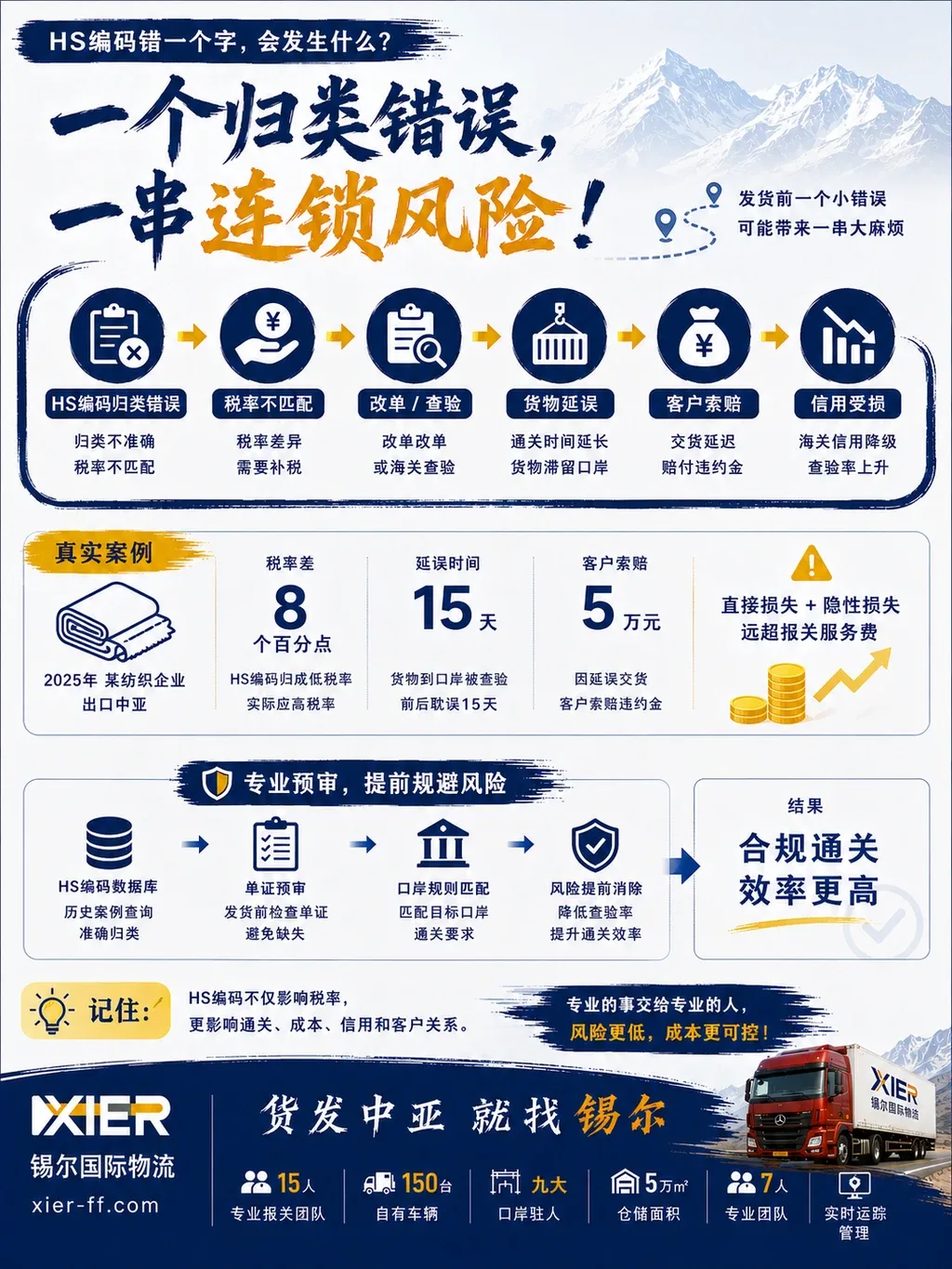
1. Time Cost: One Port Trip Takes at Least 2 Days — What Is Your Time Worth?
Many export companies — especially SMEs just entering the Central Asia market — face a choice: handle customs clearance and inspection yourself, or entrust a professional freight forwarder?
On the surface, doing it yourself looks cheaper — after all, a forwarder charges a service fee. But once you factor in time cost, compliance risk, clearance efficiency, and hidden costs, the picture changes.
Take the Irkeshtam port in Xinjiang, departing from Urumqi:
- Travel time
- Queuing time
- Inspection coordination
- Document handling
A self-run trip takes at least 2 days. With a forwarder, you only confirm cargo information before shipment — everything else is fully managed.
| Item | Self-run | Via forwarder |
|---|---|---|
| Round-trip travel | 2 days | 0 |
| Queue waiting | 0.5 day | 0 |
| Inspection coordination | 0.5 day | 0 |
| Amendment waiting | 0.5 day | 0 |
| Total | ~3.5 days | Confirmed in minutes |
Do the math: your team's 3.5 days on the road is real cost.
2. Compliance Risk: One Wrong Character in the HS Code — Cargo Detained, Fined, Credit Impacted
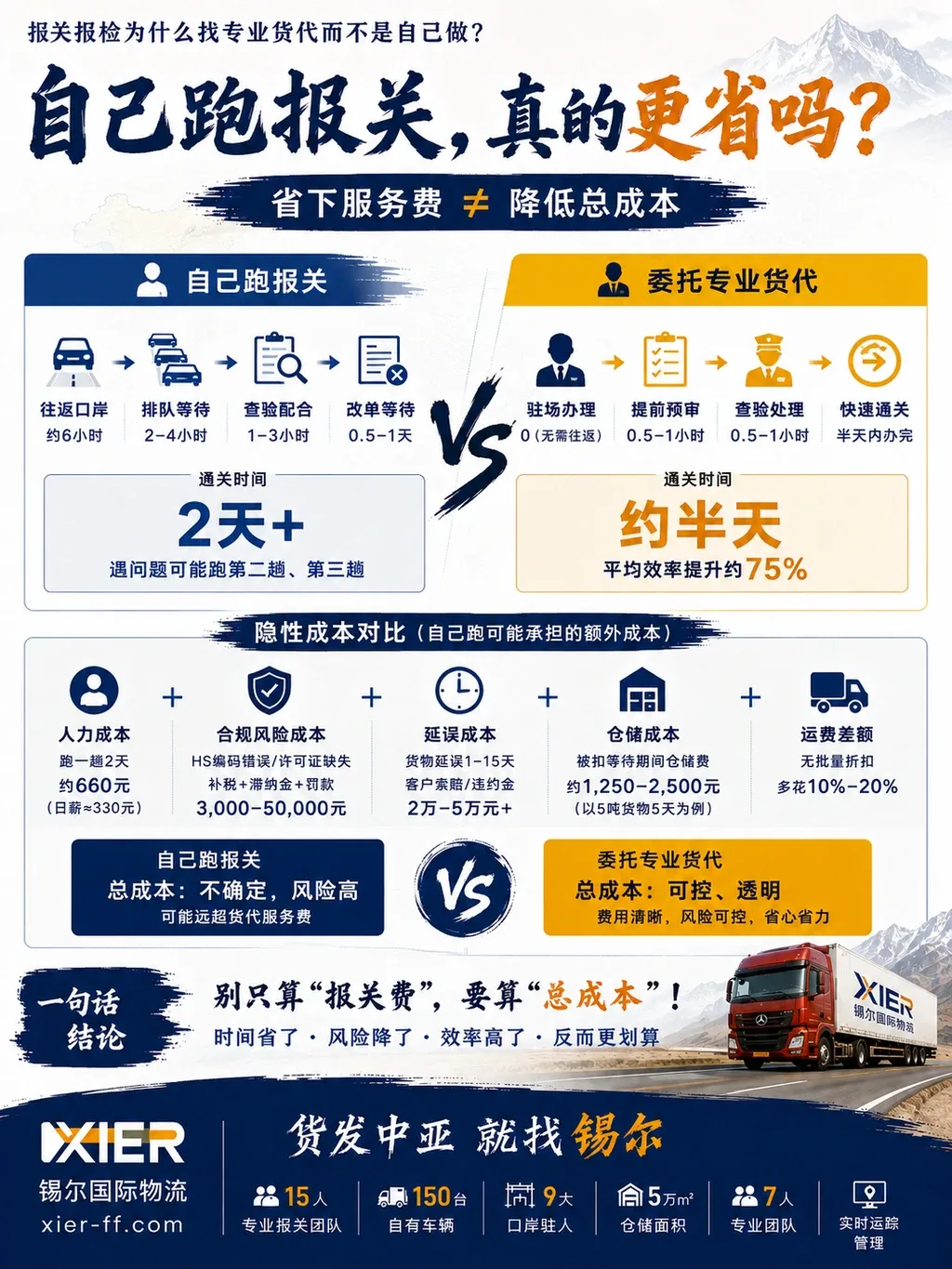
The most critical step in customs clearance is HS Code classification.
- Tax rate differences between categories
- Missing permits and licenses
- Higher inspection rate
- Credit downgrade
In a real case, a misclassified HS Code triggered back-tax and a week of delay. Professional forwarders maintain an HS Code database covering:
- Lithium-battery equipment
- Chemicals
- Food and agricultural products
Risk cost estimate:
- HS Code error back-tax: avg ¥3,000–10,000
- Missing permit re-processing: 7–15 days delay
- Credit downgrade raises future inspection rate: +1–2 days per shipment
A professional forwarder helps you avoid these risks in advance.
3. Clearance Efficiency: A Forwarder Familiar with Port Rules Waits Half the Time
Xinjiang ports have different clearance rules; unfamiliarity gets you stuck:
- Irkeshtam
- Khorgos
- Alashankou
- Khunjerab
Professional forwarders have on-site teams and long-term relationships at these ports:
- Advance appointment
- Pre-review of documents
- Emergency handling
Xier actual data:
- Self-run: Irkeshtam average clearance 1.5 days
- Via Xier: average clearance 0.8 days
4. Hidden Costs: Freight Differentials, Storage Fees, Insurance Claims — All in the Details
Self-run clearance has easily overlooked hidden costs.
1. Freight differential
Forwarders have long-term fleet and rail partners, securing volume discounts. A ¥100k freight order booked directly may cost ¥10k–20k more.
2. Storage fees
While cargo is detained or awaiting amendment, it needs port warehouse storage, billed daily — peak ¥50–100/ton/day. Five tons detained for 5 days = ¥1,250–2,500 in storage.
3. Insurance claims
If cargo is lost or damaged in transit, forwarders handle claims smoothly and quickly thanks to familiar procedures.
5. Conclusion: Self vs Forwarder — Which Is More Cost-Effective?
| Cost item | Self-run | Via forwarder |
|---|---|---|
| Labor cost (port trips) | High | None |
| Compliance risk cost | ¥3k–10k+ per error | Nearly zero |
| Clearance delay cost | 1–2 days/shipment | Minimal |
| Freight differential | ¥10k–20k per ¥100k | Discounted |
| Storage fee | Possible | Avoided |
| Forwarder service fee | None | ¥500–1,500/shipment |
| Total cost | Often higher | Transparent & lower |
One-line conclusion: counting hidden costs, a forwarder is usually the cheaper, safer choice.
6. How to Choose a Reliable Customs Clearance Forwarder
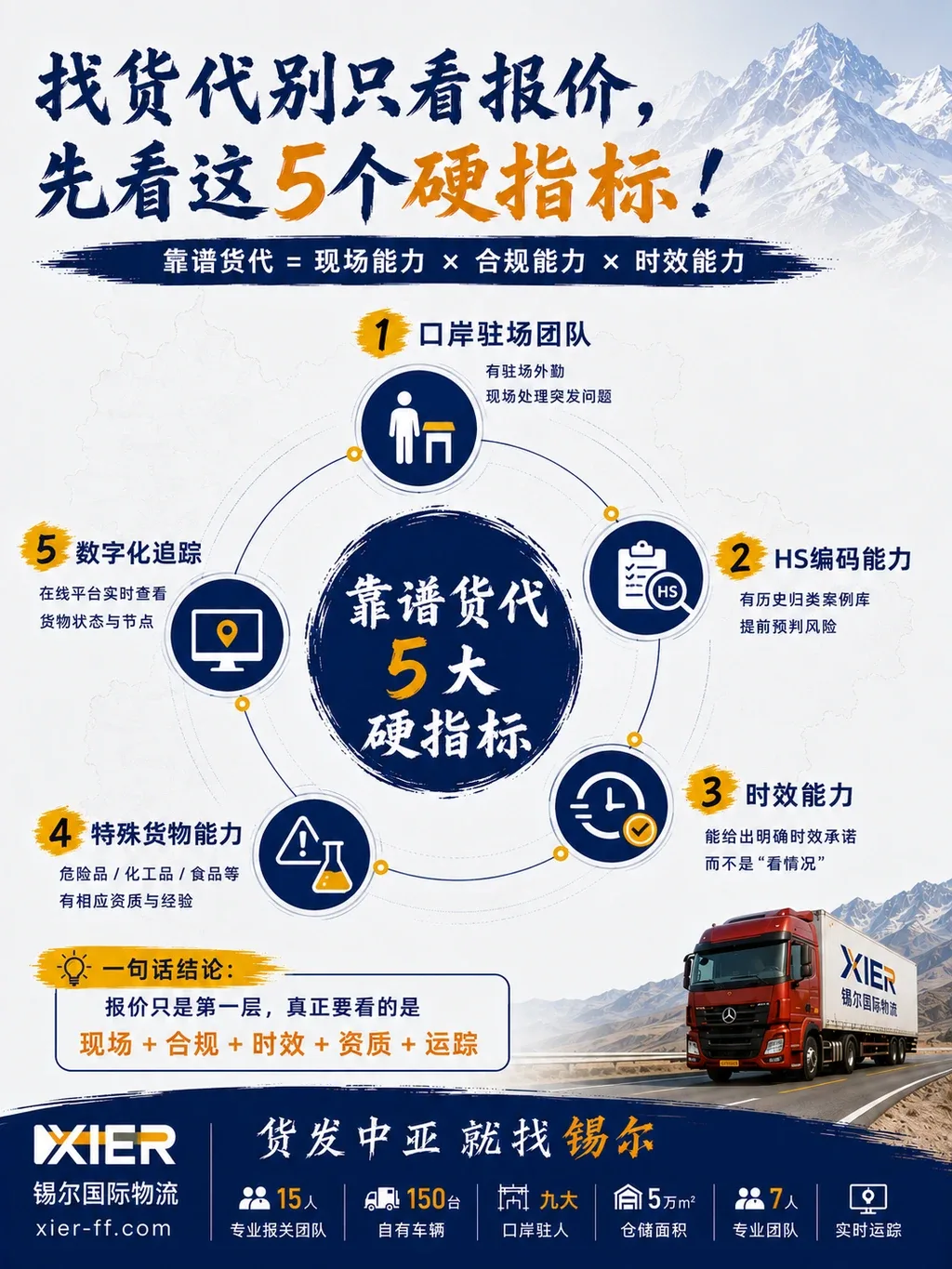
If you decide to use a forwarder, check these five indicators:
- On-site port team
- HS Code database
- Clearance time commitment
- Dangerous-goods certification
- Digital tracking
Xier International meets all five — with on-site staff at 9 major ports and a dangerous-goods certified team.
Frequently Asked Questions
Q1: What materials do I need to prepare if I entrust a forwarder for customs clearance?
Basic materials: invoice, packing list, contract, and cargo photos. For special cargo (chemicals, food, dangerous goods), you also need MSDS, inspection certificates, dangerous-goods packaging certificates, etc. The forwarder tells you in advance what is required.
Q2: What is the typical forwarder customs service fee?
Normal cargo clearance service fee is ¥500–1,500 per shipment.
Q3: If I insist on doing customs myself, what pitfalls should I avoid?
Three big pitfalls: a wrong HS Code, missing permits, and inconsistent documents. Any of these can trigger inspection, back-tax, or delay.
Q4: Can I handle dangerous-goods customs myself?
Yes, but the risk is high. Dangerous-goods clearance requires dangerous-goods certification, MSDS, and a dangerous-goods packaging certificate. A forwarder is strongly recommended.
Q5: What if the customs inspection rate is high?
A high inspection rate usually stems from HS Code risk, document problems, or the company's credit rating. Work with an experienced forwarder to keep classification and documents clean.
Shipping to Pakistan? Xier Is All You Need
From Kashgar to Islamabad, from Qingdao to Gwadar Port, Xier International Logistics provides dual-channel door-to-door service, with on-site clearance at the Khunjerab port, supporting dangerous-goods transport and FORM P issuance.
About the Author: Xier International Logistics specializes in Central Asia logistics market analysis and digital solutions. This article is based on Xier International Logistics' 10 years of frontline data and industry research and is for reference only; specific plans should be tailored to cargo characteristics.