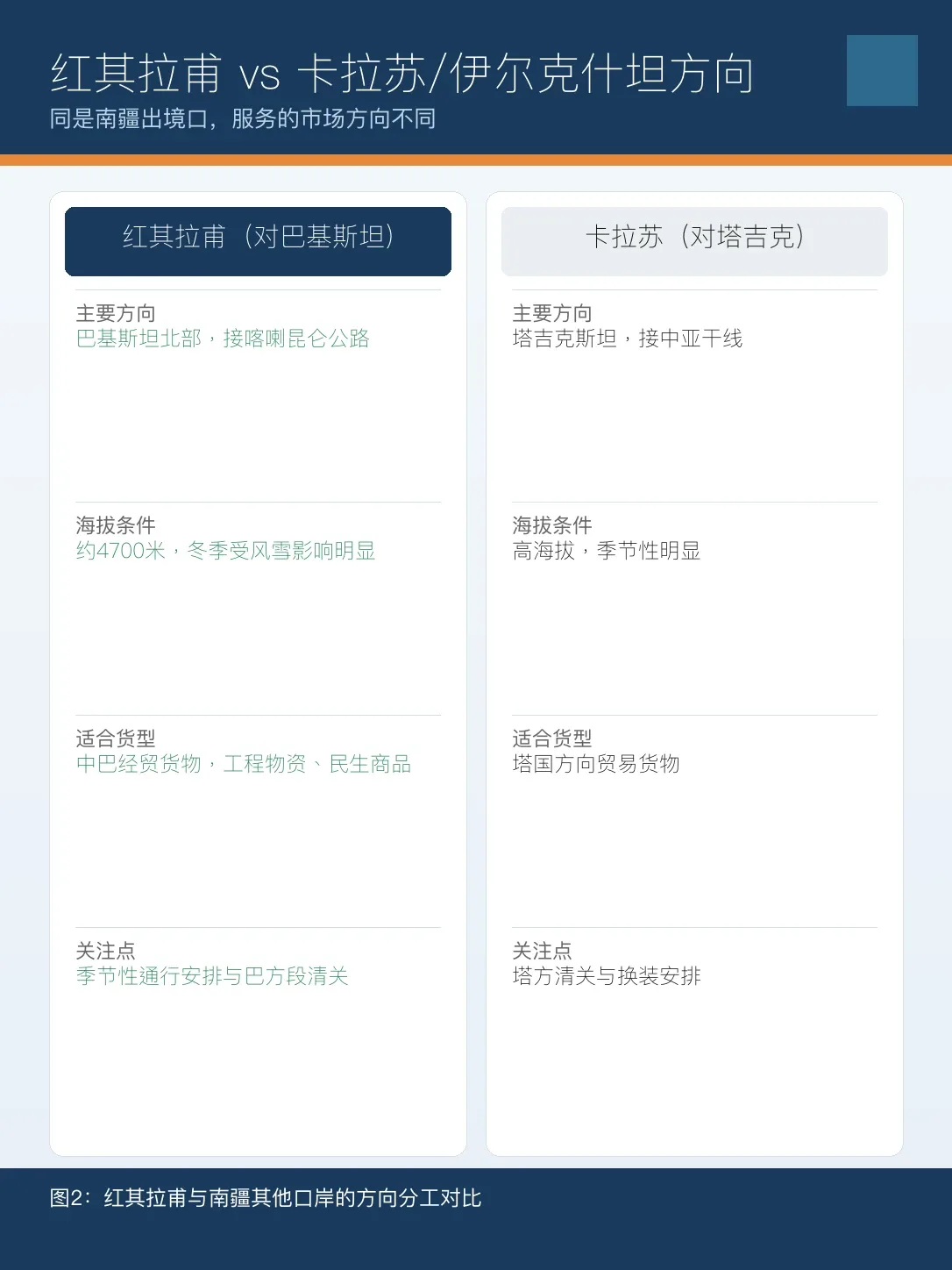
Khunjerab Port is the only land road port between China and Pakistan, located on the Pamir Plateau at an altitude of about 4,700 meters, and is the throat of the CPEC Xinjiang section. For shippers, the biggest feature of this corridor is its "seasonality": passage status fluctuates with weather and bilateral clearance arrangements; the same shipment may cross in three or four days in summer but wait several extra days in winter due to snow control. Taking this route, mastering the opening rules and clearance rhythm in advance matters more than anything.
I. Why the Port Has "Seasonality": The Plateau Environment Determines the Passage Window
Khunjerab Port is at nearly 5,000 meters altitude; every winter (roughly November to March–April of the following year), affected by blizzards and road icing, its passage capacity drops significantly, and temporary control occurs in bad weather; spring, summer, and autumn are relatively stable passage windows. On the Pakistani side, landslides and debris flows along the Karakoram Highway (KKH) may also cause intermittent interruptions.
This doesn't mean you can't travel in winter at all, but rather:Winter shipment must treat "port control" as a normal variable to manage—verify passage status before travel, leave buffer in the itinerary, and plan alternatives in advance. During peak season (spring and autumn), although passage is stable, port traffic is high and queue time rises, so margin is also needed.
II. Clearance Process: Two-Stage Clearance, Rhythm Must Align
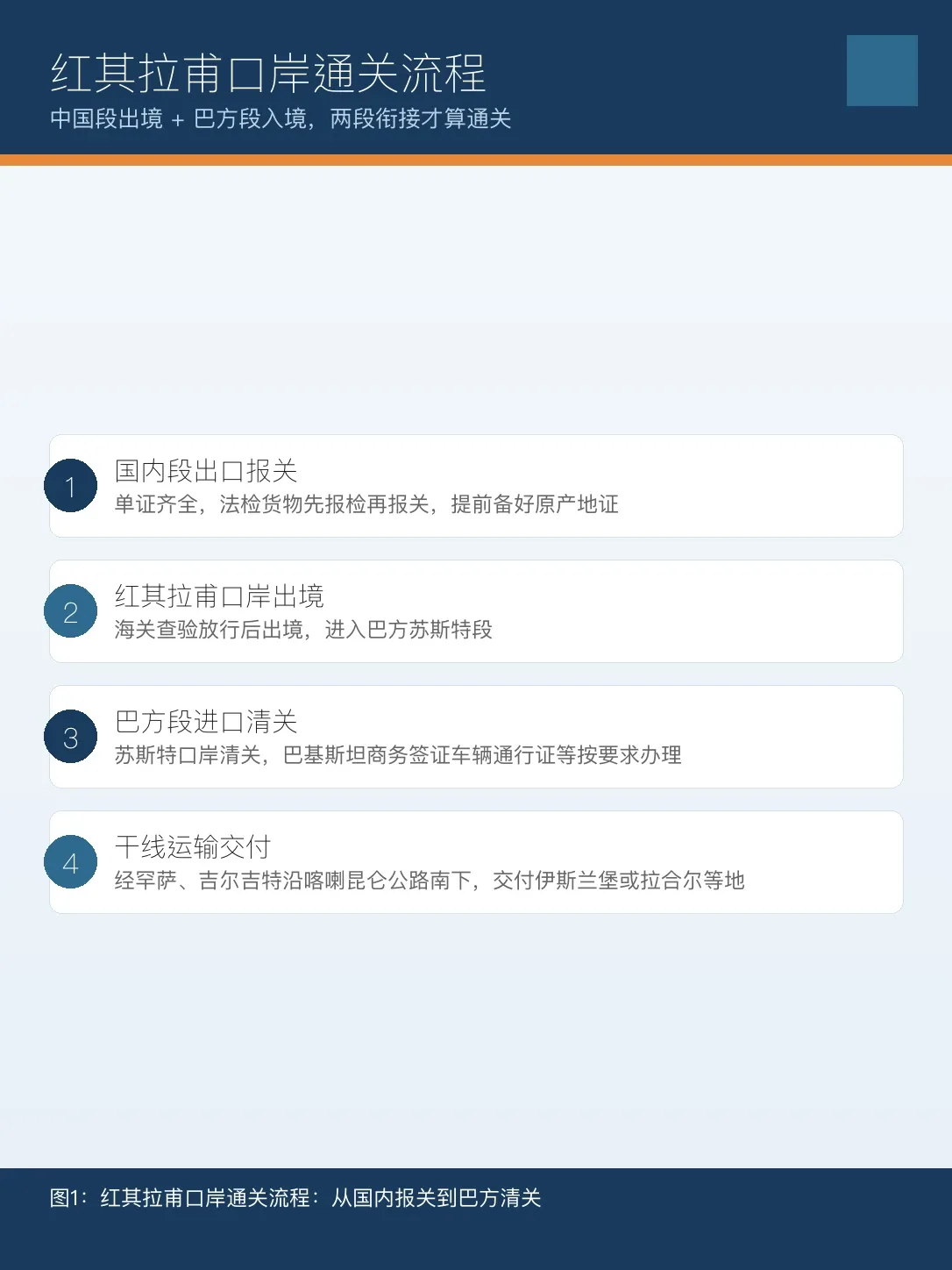
Clearance in the Khunjerab direction is divided into two stages:China Segment Export Customs DeclarationandPakistani section import clearance. The Chinese section follows the normal export process; legally inspected goods are inspected before customs declaration, and release efficiency is high once documents are complete; after exit, it enters the Pakistani Sust port for clearance. The Pakistani section's procedures, tariffs, and inspection rhythm differ from the Chinese section and require a Pakistani clearance agent to coordinate.
In practice, three types of issues commonly affect timeliness: first,document inconsistency—invoice, packing list, and actual goods don't match; inspection at either stage slows both stages' rhythm; second,missing Pakistani certification—some products require Pakistani import permits or certification; if not handled in advance, they get stuck at Sust; third,vehicle and personnel procedures—cross-border transport vehicle passage procedures must follow bilateral regulations; temporary vehicle or driver changes may cause delays.
CPEC-direction cargo is mainly engineering materials, machinery and equipment, and consumer goods, much of it in the "Kashgar consolidation—Khunjerab exit—KKH southward" combination. Inland cargo is generally first by rail or road to Kashgar, then transferred to road for exit, forming a complete rail-road multimodal chain.Central and South Asia Cross-Border Logisticsdirection, the keyword for this route is "plan-ahead."
III. Timeliness and Risk: Factor the Variables into the Delivery Date
Under normal passage conditions, Kashgar–Islamabad road transport door-to-door takes about a week, floating with Pakistani clearance and road conditions. In winter or under control, time may extend by several days. When setting the delivery date scope, it is recommended to use the "conservatively committable" approach: convert port temporary control, Pakistani inspection, and weather variables into buffer time; rather promise a bit slower than let customers wait on "theoretical timeliness."
In terms of risk, plateau transport has extra requirements for vehicles, cargo packaging, and accompanying personnel: low temperatures affect liquids, batteries, and precision instruments; some KKH sections have steep slopes and sharp turns, with reinforcement requirements for oversized and over-limit cargo higher than ordinary routes. Taking this route, choosing a carrier with plateau-route experience and on-site port handling capability makes risk much more controllable.
IV. Practical Recommendations: Five Things to Clarify in Advance
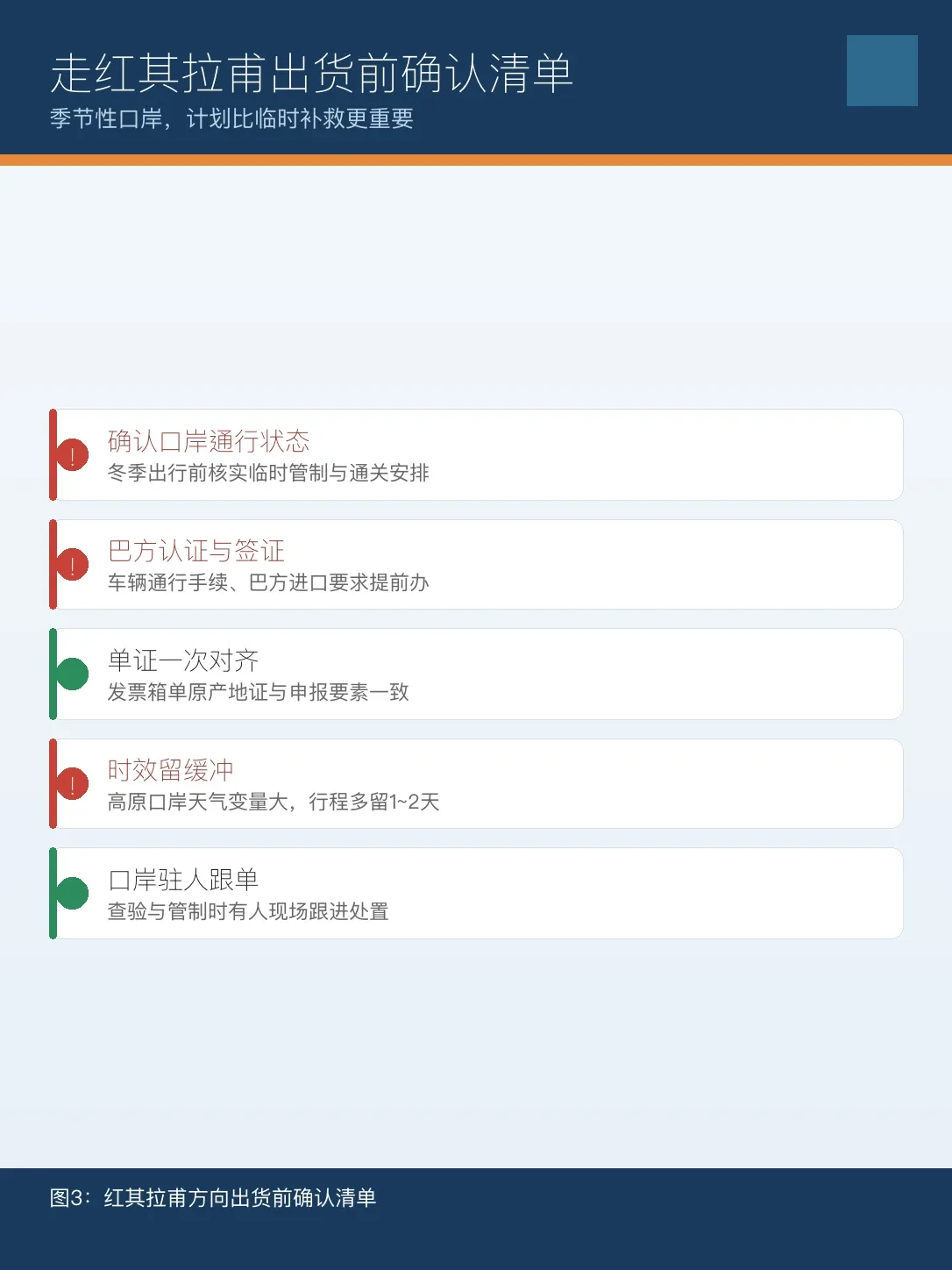
First, port passage status.Before winter shipment, verify with the logistics provider whether the port is open normally and whether there are temporary control arrangements.
Second, Pakistani-section requirements.Import permits, certifications, and clearance agent credibility—have the Pakistani agent confirm before shipment; don't wait until goods reach Sust to communicate.
Third, align documents at once.Invoice, packing list, certificate of origin (if applicable, the China–Pakistan FTA preferential certificate of origin can reduce tariff), and declaration elements—these four being consistent is the prerequisite for fast clearance at both stages.
Fourth, delivery date scope.Have the logistics provider give a per-stage timeliness table and buffer explanation, not a vague "approximate days."
Fifth, arrange port follow-up.When inspection and control occur, a carrier with an on-site team can handle on the spot, reroute or coordinate at the first moment; timeliness certainty is completely different. This is alsoOn-Site Port Staffing Servicethe magnified value of Xier on high-altitude routes.
V. How to Schedule Shipment Rhythm in Peak Season and Winter
Combining the port's seasonal patterns, the year's shipments can be divided into three rhythms:April–Juneis the spring window—stable port passage and ample vehicle supply, suitable for concentrating the first half's planned cargo;July–Octoberis the summer and early autumn window with good passage conditions, but geological disaster risk along the KKH rises slightly in the rainy season—watch road condition notices;November to March of the following yearis the winter control period, suitable only for reserve cargo insensitive to timeliness; delivery-date-sensitive cargo should avoid this window.
For customers traveling the CPEC direction long-term, a steadier approach is to build a "window calendar" with the logistics provider: list expected port passage, vehicle price trends, and Pakistani holidays (Ramadan, Independence Day, etc., which affect clearance rhythm) by month, and split the annual shipment plan by window. Planning ahead lets peak-season freight fluctuations and winter control risks be absorbed in advance rather than reacted to passively.
Frequently Asked Questions
Can Khunjerab Port be used in winter?
The port is open year-round, but in winter it is affected by plateau snow and may impose temporary traffic control based on weather; the passage window is less stable than in summer. Winter shipment requires confirming passage status in advance, reserving timeliness buffer, and preparing alternatives (such as rescheduling or rerouting).
How much tax can the China–Pakistan FTA certificate of origin save?
The China–Pakistan FTA covers most industrial goods and some agricultural products; with a qualified certificate of origin (FORM P), you can enjoy the agreement tariff rate at Pakistani clearance, with the specific reduction determined by the tariff schedule. The certificate of origin must be applied for before shipment; retroactive application cannot enjoy the preference.
What if cargo is stuck at the Pakistani section?
First distinguish the cause: document issues (correct materials), tax issues (handled per Pakistani tariff), missing certification (re-apply or apply for exemption), inspection detention (cooperate with investigation). An experienced Sust clearance agent can greatly shorten processing time; choosing the Pakistani agent before shipment matters far more than finding one after the fact.
What should oversized equipment watch for on this route?
Some KKH sections restrict over-limit vehicles; oversized transport must check vehicle type, loading plan, and bridge/culvert capacity along the way in advance, and transport in segments if necessary; plateau low temperatures require protection for equipment's sensitive parts, and reinforcement standards must be higher than ordinary road routes.
How to organize multimodal transport from inland?
The common approach is inland by rail to Kashgar (or a Xinjiang consolidation point), then transfer to road to Khunjerab for exit, connecting to the Pakistani trunk. The key to the multimodal plan is the handoff at transshipment: who is responsible for short hauls, who for secondary customs declaration, and how responsibilities are split—all must be written clearly in the contract to avoid the two carriers pushing blame on each other.
About the Author: Xier International Logistics — focused on Central Asia logistics market analysis and digital solutions. Based on a decade of Xier's operational data and industry research, this article is for reference only; specific solutions must be tailored to your cargo.