I. Why Look at the Central Asia Trucking Route
The five Central Asian countries (Kazakhstan, Uzbekistan, Kyrgyzstan, Tajikistan, Turkmenistan) are connected to Xinjiang by land, and road transport is the most direct and flexible mode. Compared with rail, trucking offers door-to-door service, controllable transit time, and cost-effectiveness even for small batches, especially suitable for enterprises in southern Xinjiang — goods from Kashgar, Aksu, Korla and surrounding areas can exit via southern Xinjiang ports such as Irkeshtam, Torugart, and Karasu by trucking, which is closer than detouring to northern Xinjiang's railways.
Xier International Logistics focuses on trucking, operating 150 foreign-related transport vehicles of its own and maintaining long-term staff at 9 major ports. Among them, the southern Xinjiang ports (Irkeshtam, Torugart, Karasu, Khunjerab) are all equipped with owned vehicles and on-site field teams, enabling an end-to-end "domestic pickup — port customs clearance — direct delivery abroad" service without relying on third-party transloading.
II. Main Trucking Routes and Transit Times
The core of a trucking route is first aligning three things: "where the goods depart from, which country they go to, and which port they pass through." Below are the most frequently used Central Asia trucking trunk lines in Xier's daily operations:
- Kashgar → Irkeshtam → Tashkent: About 240 km from Kashgar to Irkeshtam port, and about 916 km from the port to Tashkent, with the full trucking journey taking about 3–5 days (excluding port clearance time). This is the most frequently used Central Asia trucking trunk line for Xier.
- Kashgar → Torugart → Bishkek: Torugart leads to Kyrgyzstan; about 171 km from Kashgar to Torugart, and about 720 km to Bishkek.
- Kashgar → Karasu → Dushanbe: Karasu leads to Tajikistan; about 220 km from Kashgar to Karasu, and about 850 km from Karasu to Dushanbe.
- Khorgos / Alashankou → Almaty: The main corridor in northern Xinjiang, where trucking runs in parallel with rail, suitable for large-volume shipments to Kazakhstan.
- Khunjerab → Islamabad / Karachi: Leading to Pakistan, in the South Asia direction.
Transit time note: Road transport generally reaches major Central Asian cities within 3–7 days, depending on port clearance efficiency, cargo type, and the distance to the destination city. Dangerous goods, cold-chain, and oversized cargo will additionally occupy clearance and loading/unloading time.
III. Cost Structure: Where Trucking Costs More and Where It Saves
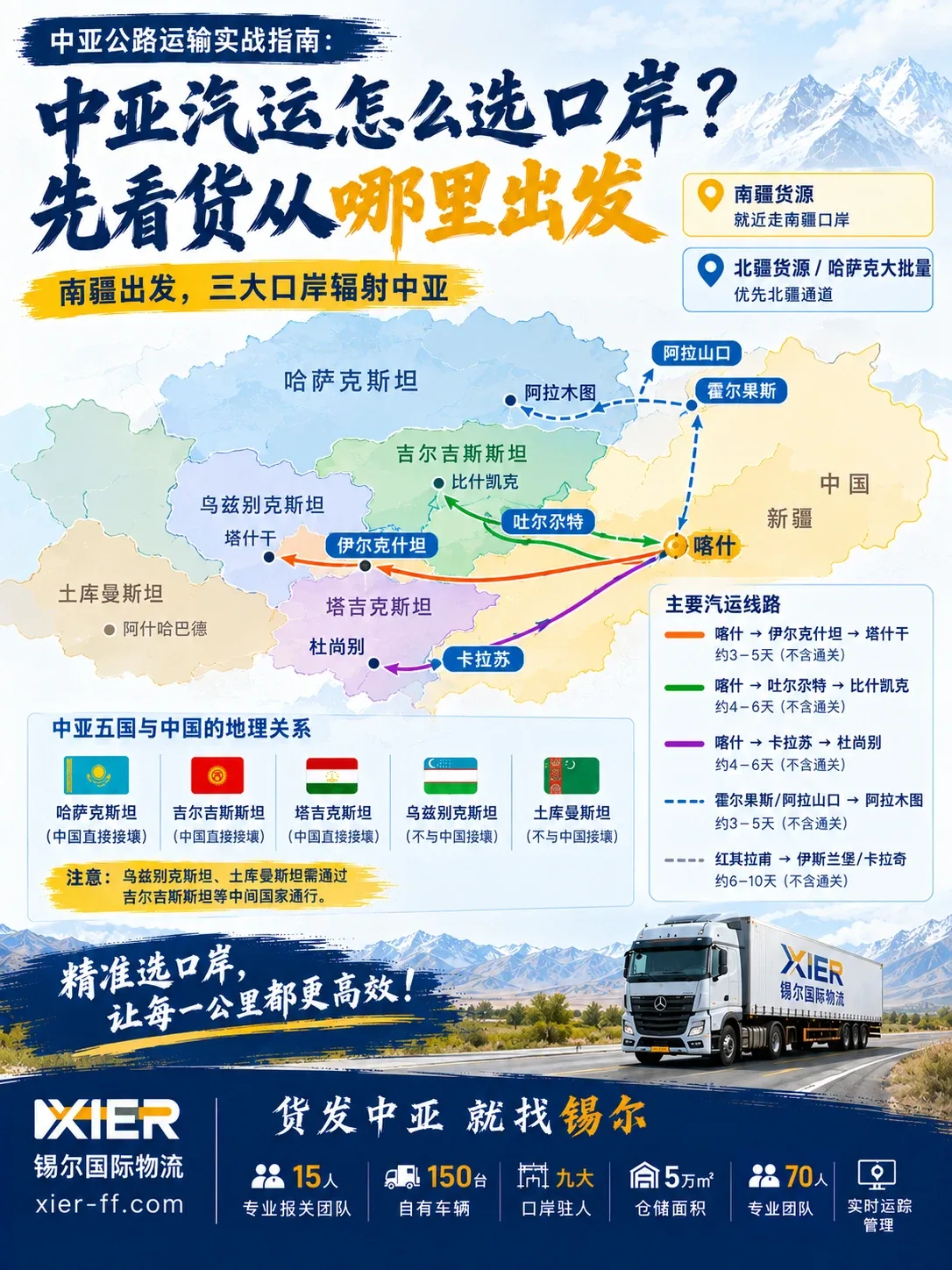 图1:以南疆喀什为起点,经伊尔克什坦、吐尔克斯坦、卡拉苏等口岸辐射中亚五国(哈/吉/塔/乌/土),按货的出发地就近选口岸,比绕北疆更近更省。
Trucking costs mainly consist of four parts: vehicle freight (by full truckload or ton-kilometer), port incidental fees (weighing, storage, loading/unloading), customs declaration and inspection fees, and overseas segment freight. Compared with rail, trucking saves on "door-to-door" service — no secondary transloading and no waiting for train schedules; it costs more due to slightly higher unit prices and limited single-vehicle capacity.
For small batches, urgent goods, and door-to-door needs, trucking is more cost-effective overall; for large volumes with low time sensitivity, rail is cheaper. For southern Xinjiang enterprises, eliminating the empty haul of "shipping goods to northern Xinjiang first and then onto rail" is itself a real cost saving.
IV. Customs Declaration and Inspection: Trucking Must Also Comply
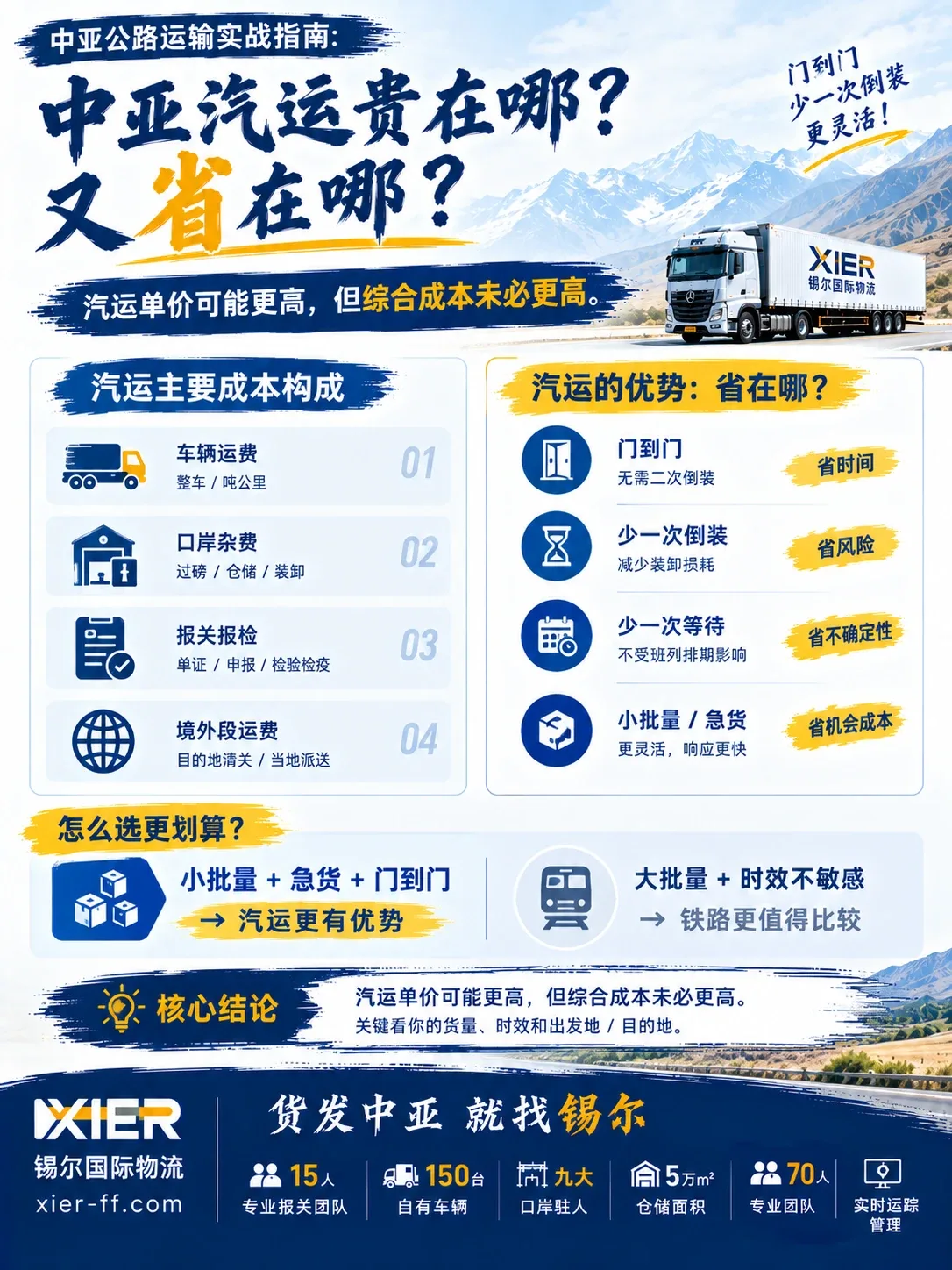 图2:汽运单看运费可能高,但综合成本未必高——门到门省二次倒装、少一次等待、小批量响应更快,四项优势抵消车辆运费溢价。
Exiting through a road port also requires customs declaration. Xier has a customs clearance team in Kashgar with an average of over 5 years of experience and has built an HS code database for core ports. Before exit, you need to prepare: commercial invoice, packing list, contract, customs declaration form, and transport documents; for dangerous goods, food, and products containing batteries, corresponding inspection certificates are also required. It is recommended to prepare all documents in advance to avoid vehicles being held at the port. Xier can handle "domestic pickup — port customs clearance — direct delivery abroad" in one stop, so customers don't need to find trucks and customs brokers separately.
V. Why Choose Xier for Central Asia Trucking
150 owned vehicles ensure transit time even in peak season and for urgent goods; staff stationed at 9 major ports enable an end-to-end service from domestic pickup to direct delivery abroad; deep cultivation of southern Xinjiang ports with owned vehicles at Irkeshtam, Torugart, and Karasu; holds dangerous goods transport qualifications (scarce in southern Xinjiang) and operates an Afghanistan dedicated line year-round; a digital tracking platform provides real-time cargo tracking, allowing customers to check location and status at any time.
Frequently Asked Questions
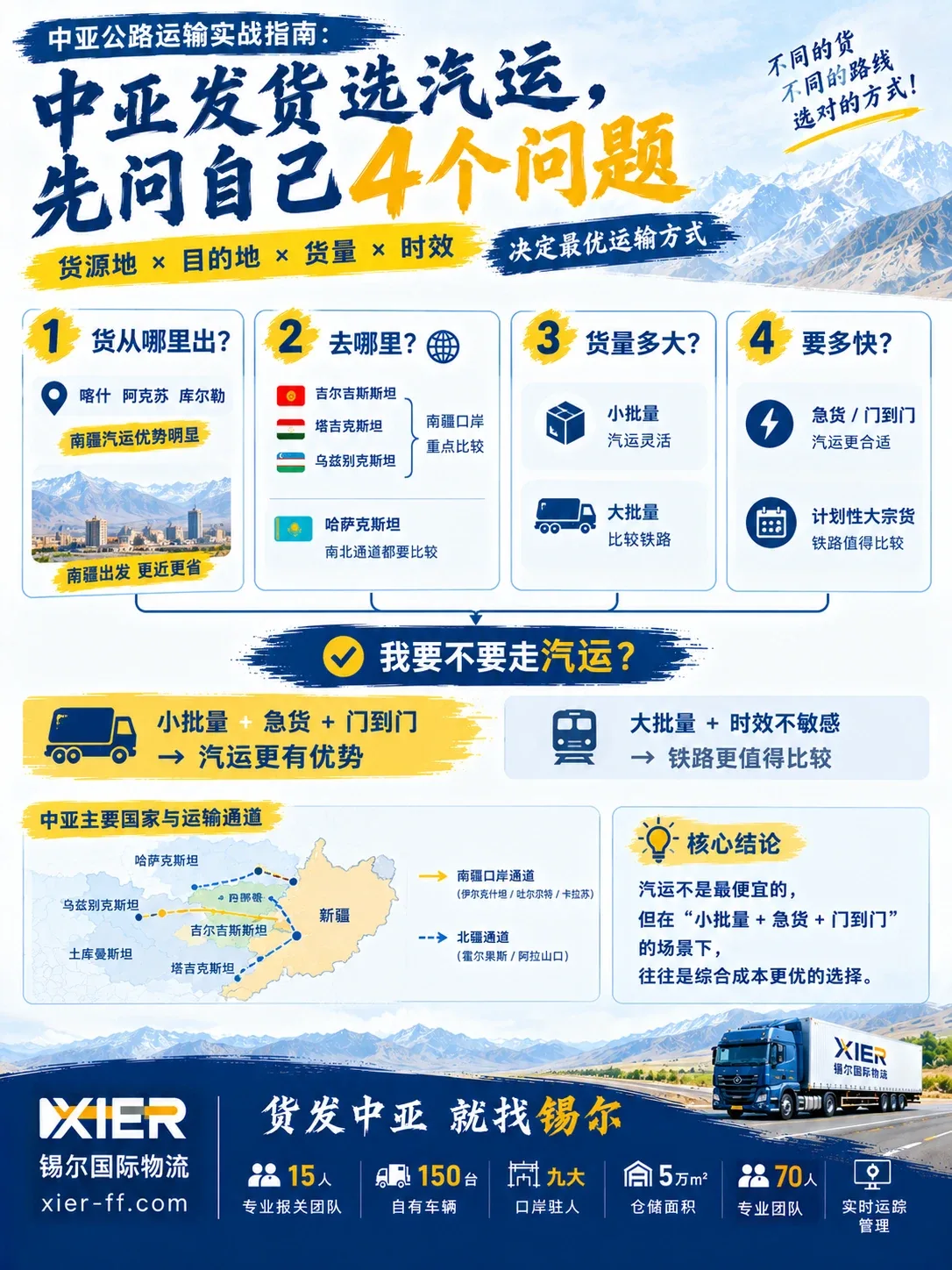 图3:发货去中亚前先自检 4 问——货从哪出、目的地、货量、时效要求;小批量+急货+门到门场景汽运综合更优,大批量+时效不敏感则铁路更值得比较。
How many days does Central Asia trucking generally take?
About 3–7 days to major cities, depending on the port and destination. Trucking from Kashgar to Tashkent takes about 3–5 days.
Can small-batch goods also go by trucking?
Yes. The less-than-truckload (LTL) consolidation model suits small batches and is more flexible for door-to-door; for large volumes, full truckload direct delivery is available.
Can dangerous goods be trucked to Central Asia?
Yes, but corresponding dangerous goods transport qualifications and compliant packaging are required. Xier possesses the scarce dangerous goods carriage capability in southern Xinjiang; see the next dedicated article for details.
What should be prepared for customs declaration?
Invoice, packing list, contract, customs declaration form, and transport documents; inspection certificates are added for special goods.
How to check where the goods are?
Xier's digital tracking platform updates location and status in real time, and customers can query at any time.
About the Author: Xier International Logistics — focused on Central Asia logistics market analysis and digital solutions. Based on a decade of Xier's operational data and industry research, this article is for reference only; specific solutions must be tailored to your cargo.