I. Why Export Tax Rebate Deserves Attention from Foreign Trade Enterprises
For export-oriented enterprises, export tax rebate is not a "take-it-or-leave-it" subsidy, but a key link that directly affects quotation competitiveness and net profit. The value-added tax (VAT) paid on exported goods during domestic production and circulation can, upon meeting the conditions, be refunded after export, effectively removing the tax burden from the final price and giving the product more pricing room in the international market.
In reality, however, many enterprises fail to get the rebate they deserve — or even trigger compliance risks — because of loose document management, incorrect commodity code classification, or untimely foreign exchange collection. Thoroughly understanding the rebate process and keeping complete documents is a basic skill for foreign trade operations.
II. Full Export Tax Rebate Process: From Customs Declaration to Rebate Arrival
An export tax rebate typically goes through the following five steps:
1. Customs declaration and export: The goods actually leave the country, and the export customs declaration form (rebate copy) is obtained, which is the core voucher for the rebate.
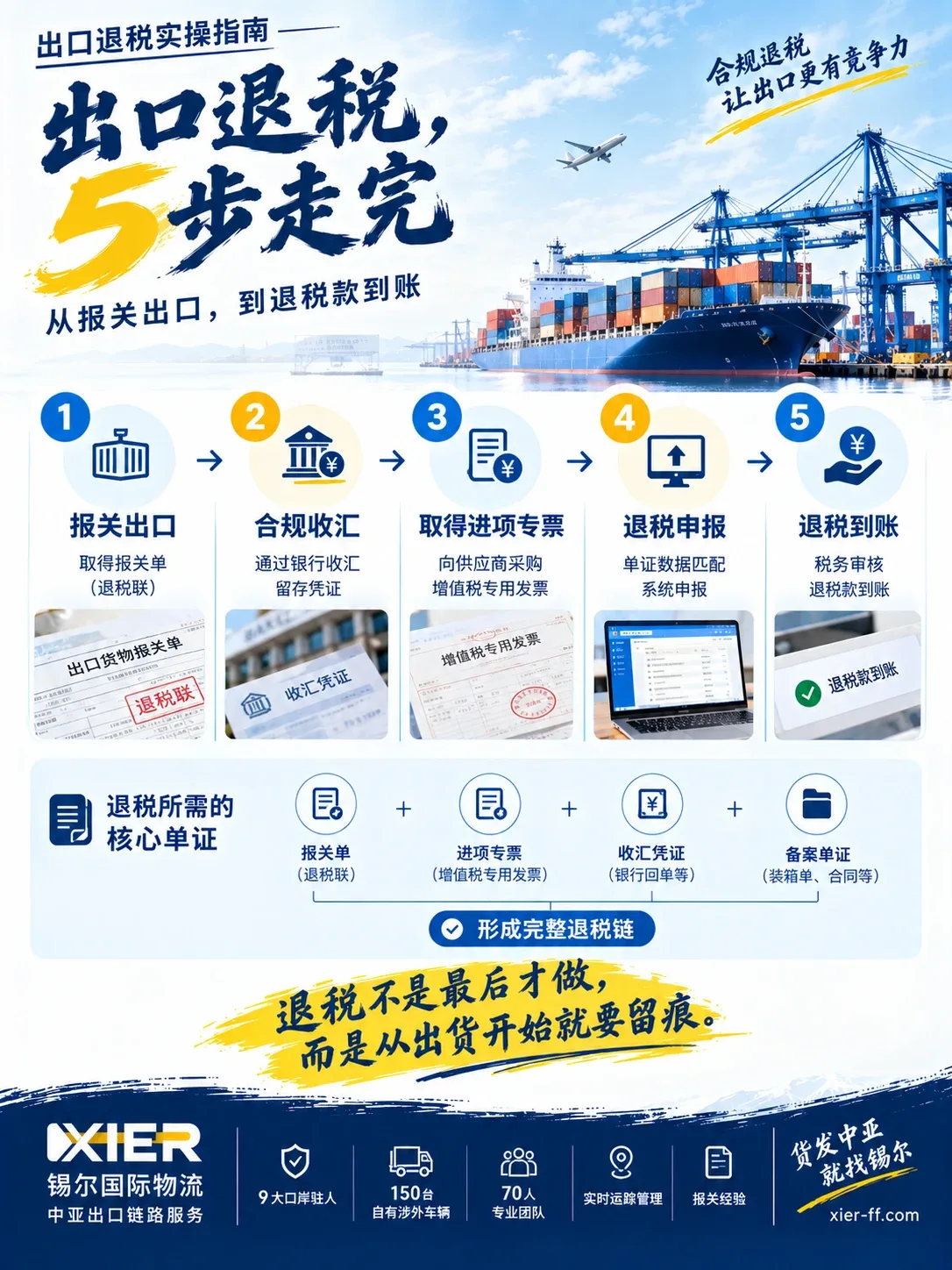 图1:出口退税全流程——报关出口取得报关单 → 合规收取外汇 → 取得增值税专用发票(进项)→ 单证齐备系统申报 → 税务审核退税款到账。每一步的单证都要留痕,缺一环都可能影响退税。
2. Collect foreign exchange: Compliantly collect foreign exchange through a bank as required; the foreign exchange collection certificate is one of the important prerequisites for rebate filing.
3. Obtain input special invoice: The VAT special invoice obtained when purchasing from suppliers is the basis for calculating the rebate amount.
4. Rebate filing: Enter the customs declaration form, invoice, foreign exchange collection, and other information into the rebate filing system to form filing data.
5. Rebate arrival: After the tax authority's review is approved, the rebate is returned to the enterprise's account.
III. Common Risk Points and Pitfall Cases
In frontline practice, enterprises are most likely to stumble in the following four areas:
① Incorrect commodity code (HS) classification: Both the rebate rate and regulatory conditions are determined by the commodity code; incorrect classification directly applies the wrong rebate rate, at best requiring tax repayment and at worst being classified as false declaration. Countermeasure: Determine the code by the actual use and material of the goods; if unsure, check the tariff or ask a professional customs broker first.
② Missing filing documents: Packing lists, bills of lading, contracts, etc. are not retained for inspection as required; failure to provide them during tax verification triggers risk. Countermeasure: Build a file upon shipment, store documents in a dedicated cabinet, and keep electronic backups as double insurance.
③ Untimely foreign exchange collection: Foreign exchange collection is one of the prerequisites for rebate; prolonged non-collection not only blocks the rebate but also triggers foreign exchange management alerts. Countermeasure: Specify the collection period in the contract and build a collection ledger for tracking.
④ Improper handling of no-invoice goods in cross-border e-commerce: No-invoice goods that do not go through "no-invoice tax exemption" or assessed collection, blindly declared as general trade, easily become non-compliant. Countermeasure: First confirm the applicable regulatory mode (e.g., 9610 / 9710 / 9810) before filing.
IV. Special Aspects of Cross-Border E-Commerce Export Tax Rebate
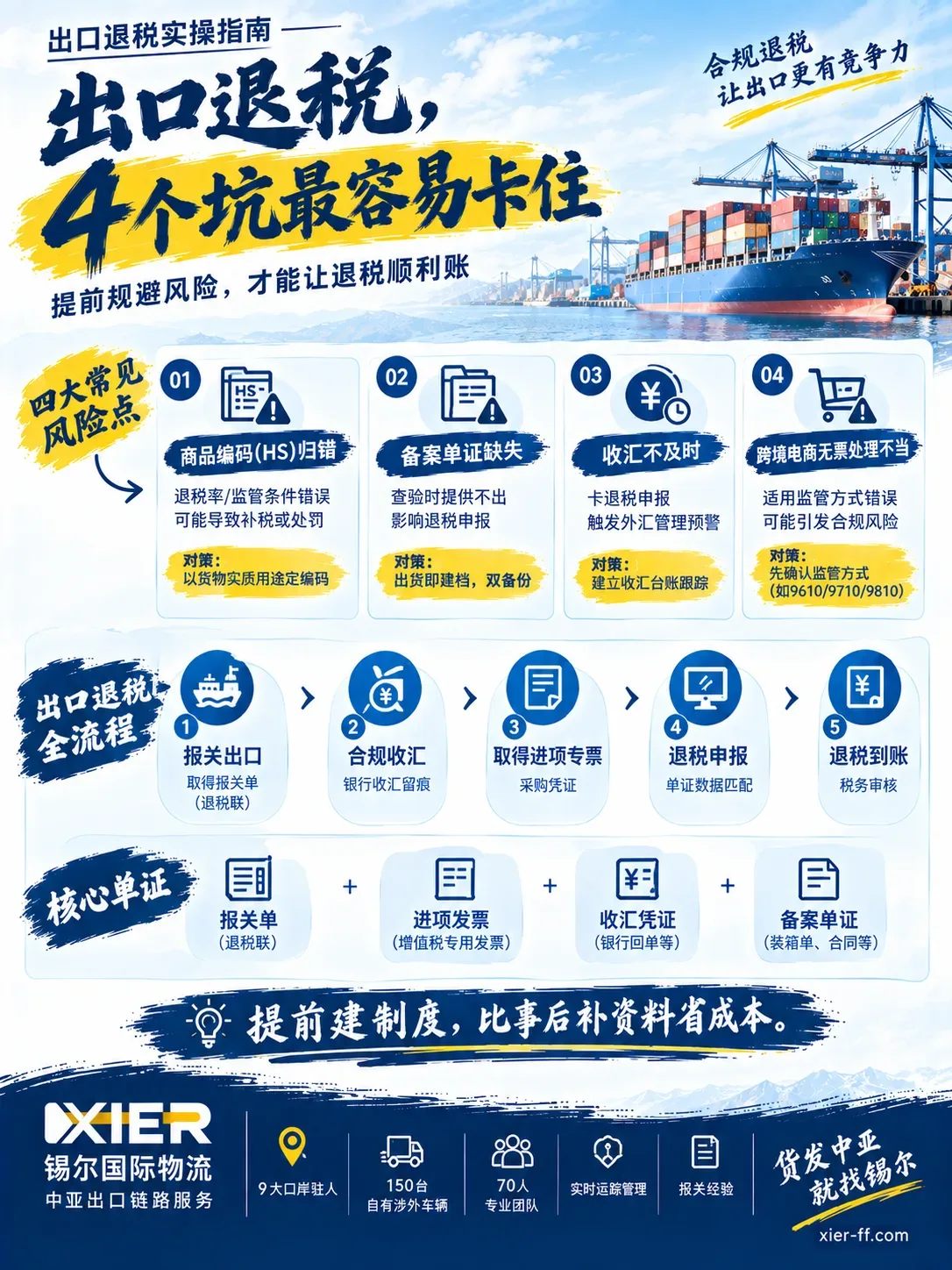 图2:出口退税最容易卡住的四个坑——商品编码(HS)归错、备案单证缺失、收汇不及时、跨境电商无票处理不当,以及对应的规避动作。提前建制度比事后补资料更省成本。
Compared with traditional general trade, cross-border e-commerce export has a different document form: the "three documents" — order, logistics waybill, and payment document — are the core, and common regulatory modes include 9610 (retail direct mail), 9710 (cross-border e-commerce B2B direct export), and 9810 (overseas warehouse). Some no-invoice goods can apply "no-invoice tax exemption" or assessed enterprise income tax collection, lowering the compliance threshold.
Note that cross-border e-commerce export must also hold the three bottom lines of accurate commodity codes, compliant foreign exchange collection, and document retention, only differing in that document organization relies more on platform data and logistics trajectories. Reconciling the "three documents" with customs declaration data is the key to smooth rebates for cross-border e-commerce.
V. Compliance Recommendations for Foreign Trade Enterprises
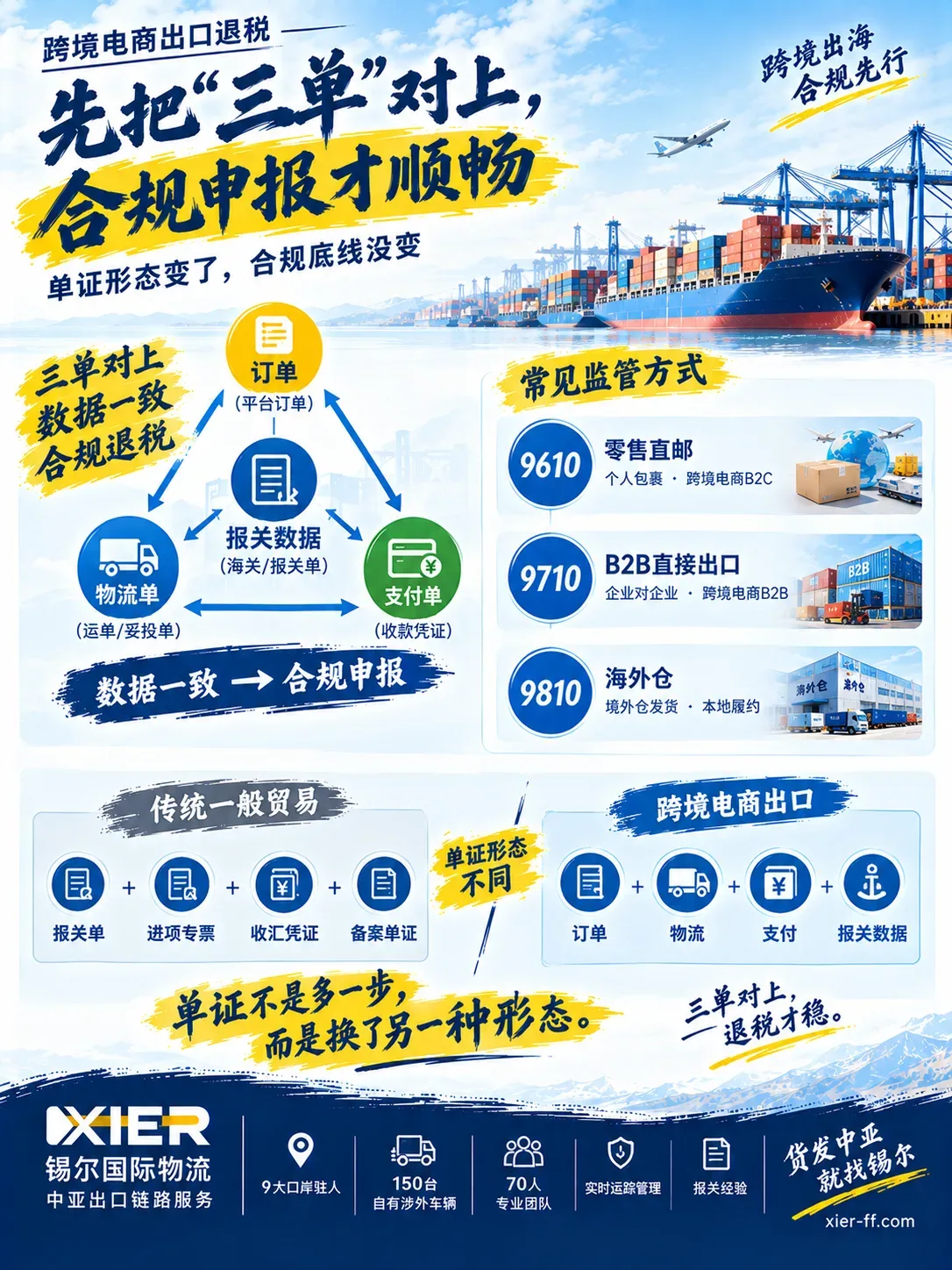 图3:跨境电商出口退税——先把"订单、物流单、支付单"三单对上、数据一致,再按正确监管方式(9610 零售直邮、9710 B2B 直接出口,9810 海外仓)申报,合规退税才顺畅。
Based on frontline experience, here are some practical recommendations for enterprises exporting to Central Asia and cross-border:
1. Build a system: Plan the rebate chain from the contract signing stage; don't wait until after shipment to supplement documents.
2. Retain documents: Store the customs declaration form, invoices, foreign exchange collection certificates, and filing documents by category, with paper + electronic double backups.
3. Verify HS Code: The commodity code is the "foundation" of the rebate; if unsure, confirm before filing.
4. Monitor foreign exchange collection: Use a ledger to track each foreign exchange collection node, avoiding overdue impact on the rebate.
5. Find partners: Hand the customs declaration and logistics links to experienced compliant carriers and customs teams, connecting "transport + customs declaration + rebate documents" to reduce cross-link friction. Xier International Logistics maintains long-term staff at 9 major ports, operates 150 owned foreign-related transport vehicles, and has a Kashgar customs team with over 5 years of experience, able to undertake integrated "domestic pickup — customs declaration — port inspection — direct delivery abroad" services for the Central Asia direction, helping enterprises build a solid front end of the export chain.
Frequently Asked Questions
Can all exported goods receive a tax rebate?
No. Rebate requires meeting conditions such as being a general VAT taxpayer, obtaining compliant input special invoices, and actual export with foreign exchange collection of the goods; some tax-exempt or non-rebate goods do not apply. The specifics are subject to tax authority regulations.
What are the consequences of incorrect commodity code classification?
The code determines the rebate rate and regulatory conditions; incorrect classification leads to wrong rebate rate application, at best requiring tax repayment and at worst being deemed false declaration, affecting enterprise credit. Be sure to confirm the code accuracy before shipment.
Does untimely foreign exchange collection affect the rebate?
Yes. The foreign exchange collection certificate is one of the important prerequisites for rebate filing; prolonged non-collection may block the rebate filing and trigger foreign exchange management alerts. It is recommended to use a ledger to track each collection node.
How to compliantly handle no-invoice cross-border e-commerce goods?
Eligible no-invoice goods can apply "no-invoice tax exemption" or assessed enterprise income tax collection; you must first confirm the applicable regulatory mode (e.g., 9610 / 9710 / 9810) before filing, and cannot blindly treat them as general trade.
What is the relationship between choosing a logistics carrier and tax rebate?
The customs declaration form and transport documents are core rebate documents; whether the carrier can provide compliant documents promptly and accurately directly affects rebate efficiency. Choosing an experienced compliance team can connect "transport + customs declaration + rebate documents," reducing cross-link errors.
About the Author: Xier International Logistics — focused on Central Asia logistics market analysis and digital solutions. Based on a decade of Xier's operational data and industry research, this article is for reference only; specific solutions must be tailored to your cargo.