1. Tajikistan's Economy and the Dushanbe Trade Hub
Tajikistan has maintained an economic growth rate above 6% annually, driven by aluminium exports, cotton production, and a growing infrastructure investment programme. Dushanbe, the capital, is the country's primary commercial centre and the distribution hub through which most imported goods flow before reaching regional markets.
- Dushanbe's strategic position on the northern Tajik-Kyrgyz border corridor makes it the natural endpoint for cargo arriving from China via Kyrgyzstan
- Key trade corridors radiating from Dushanbe serve Kulob in the south, Khujand in the north, and the Gorno-Badakhshan Autonomous Region in the east
- International development projects — funded by the World Bank, Asian Development Bank, and bilateral donors — continue to drive demand for construction materials and machinery imports
2. The Karamay Port: Primary Gateway to Tajikistan
The Karamay Port is the primary customs exit point for Tajikistan-bound cargo originating from China. Unlike more famous Xinjiang ports, Karamay operates with a smaller footprint but serves a critical function: it is the most direct route for southern Xinjiang-to-Tajikistan road freight.
- Karamay is situated in the Karamay prefecture of northern Xinjiang, making it geographically closer to the Kyrgyzstan border than eastern ports like Irkeshtam
- The route from Karamay to Dushanbe runs: Karamay → Kyrgyzstan Osh corridor → Kanibadam/Karamay border crossing → Dushanbe
- Port infrastructure at Karamay is functional but less established than major crossings — on-ground coordination is essential
3. The Mountain Challenge: Why 93% Terrain Coverage Shapes Logistics
Tajikistan's geography is the defining constraint for all logistics operations in the country. With approximately 93% of its territory classified as mountainous or semi-mountainous, the country presents unique transport challenges that do not exist in its flatter Central Asian neighbours.
- The Pamir Highway (M41) is the backbone of Tajikistan's road network, running east to west through the most challenging terrain
- High-altitude passes (above 3,000–4,000 metres) are subject to seasonal closure from November to April
- Road quality varies dramatically — primary highways are paved but secondary roads are often gravel or dirt
- This terrain limits which cargo types can enter Tajikistan and which entry points are viable

The practical consequence: route selection for Tajikistan must account for altitude, season, cargo weight, and vehicle type. Not all border crossings are open year-round.
4. Three Dominant Import Categories to Tajikistan
Machinery and industrial equipment
- Construction machinery (excavators, bulldozers, concrete equipment) for infrastructure projects
- Agricultural equipment (tractors, harvesters, irrigation systems) for the country's significant agricultural sector
- Power generators and electrical equipment for grid development and off-grid communities
Building materials
- Steel rebar, structural steel, and cement for ongoing construction and infrastructure projects
- Glass panels and aluminium profiles for commercial and residential building
- These cargo types are typically high-volume, shipped in containers or as breakbulk
Chemical raw materials
- Industrial chemicals for Tajikistan's aluminium industry and manufacturing sector
- Fertilisers for the agricultural sector
- Coatings, adhesives, and chemical intermediates
- Chemical imports require MSDS documentation and may require special import permits
5. Kyrgyzstan Transit Corridor: The Osh Route
Almost all Tajikistan-bound cargo from China transits through Kyrgyzstan's Osh corridor. This segment is the critical enabler of the full route.
- Cargo enters Kyrgyzstan from Karamay or other southern Xinjiang entry points
- The Osh logistics zone is the consolidation point for Tajikistan-bound cargo
- Osh is well-connected by road to the Kyrgyz-Tajik border crossings at Kanibadam and Karamay
- Kyrgyzstan transit documentation (CMR waybill, E-customs transit declaration) must be prepared before the cargo leaves China
6. Tajikistan Customs Clearance: Key Requirements
Tajikistan customs has specific requirements that differ from neighbouring Kyrgyzstan and Uzbekistan:
- Tajik customs requires an import declaration submitted by a locally registered Tajik customs broker — foreign forwarders cannot clear cargo directly
- The HS Code classification must be precise; Tajikistan customs applies different duty rates than regional neighbours
- Certificate of origin is required for preferential tariff treatment under regional trade agreements
- For machinery and equipment imports, a technical specification sheet in Russian or Tajik is often requested
Xier works with registered Tajik customs brokers to ensure smooth clearance at the border and in Dushanbe.
7. Xier's Tajikistan Dedicated Service
Xier provides a dedicated Tajikistan logistics service, not a general-purpose route with occasional Tajik cargo:
- Kashgar on-ground staff: Xier has dedicated personnel positioned near the Karamay Port departure zone, managing pre-clearance documentation and port coordination
- Kyrgyzstan transit management: Full transit documentation (CMR, E-customs) prepared and submitted before cargo departs China
- Tajik customs broker coordination: Pre-arranged clearance through registered Tajik customs brokers
- Dushanbe last-mile delivery: Coordination with local forwarding partners for delivery to final addresses
- Transit time: 10–15 days from Karamay departure area to Dushanbe
8. Tajikistan vs Kyrgyzstan vs Uzbekistan: Which Route for Which Cargo?
Choosing the right country corridor depends on the final destination and cargo profile:
- Tajikistan (via Karamay + Osh): Best for cargo destined for Dushanbe, Kulob, Khujand, and the northern and eastern regions. Also the route for cargo that will enter Afghanistan via the Kulma Pass.
- Kyrgyzstan (via Irkeshtam or Torugart): Best for cargo destined within Kyrgyzstan or transiting to Uzbekistan's Andijan region. Faster road route but does not serve Tajikistan directly.
- Uzbekistan (via Khorgos corridor): Best for Tashkent and western Uzbekistan. Rail-accessible. Not suitable for Tajikistan delivery.
Frequently Asked Questions
Q1: What is Tajikistan's main customs gateway from China?
The Karamay Port is the primary customs gateway for Tajikistan-bound cargo originating from China. Cargo departs southern Xinjiang via Karamay, transits through Kyrgyzstan via the Osh corridor, and enters Tajikistan at the Kanibadam or Karamay border crossing points. The route is approximately 1,200–1,500 km depending on the final destination.
Q2: Why does 93% mountain coverage make Tajikistan logistics challenging?
Tajikistan's predominantly mountainous terrain (93% is mountainous or semi-mountainous) means that road infrastructure is limited and often difficult. The Pamir Highway and northern corridors are the main arteries. Winter road closures are common on high-altitude passes. This terrain drives up transport costs and limits which ports and border crossings can be used.
Q3: What are the main import cargo types into Tajikistan?
The three dominant import categories are: machinery and industrial equipment (construction machinery, agricultural equipment, generators), building materials (steel, cement, glass for infrastructure projects), and chemical raw materials (industrial chemicals, fertilisers, coatings). Consumer goods and electronics also form a growing segment.
Q4: Does Xier have on-ground operations for Tajikistan shipments?
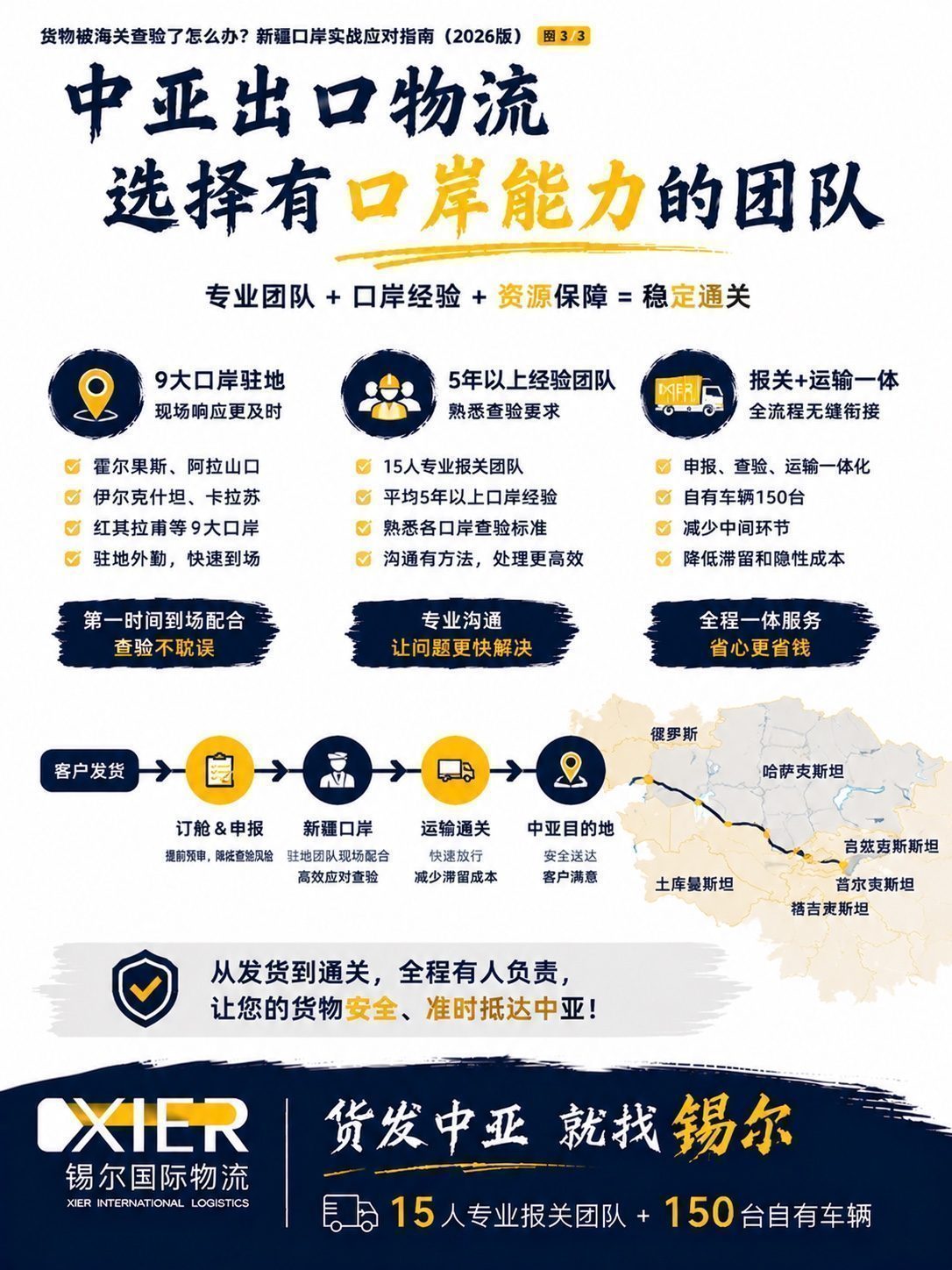
Yes. Xier has dedicated on-ground staff positioned in the Kashgar area, close to the Karamay Port departure point. This team manages cargo pre-clearance documentation, port coordination, vehicle scheduling, and Kyrgyzstan transit documentation.
Q5: What is the transit time from China to Dushanbe?
Standard transit time from the Karamay Port area to Dushanbe is 10–15 days, depending on documentation readiness and border crossing conditions. Pre-cleared shipments move at the faster end. The Kyrgyzstan transit segment typically adds 3–5 days. Winter conditions may add 2–4 days.
About the Author: Xier International Logistics specialises in Central Asia logistics market analysis and digital solutions. This article is based on Xier International Logistics' 10 years of frontline data and industry research and is for reference only; specific plans should be tailored to cargo characteristics.