'The cargo arrived at the port, and suddenly we got notice that it's held for customs inspection' — these are the most nerve-wracking words in the foreign-trade and freight-forwarding community. Cargo stuck at the port, delivery dates slipping day by day, client calls one after another, and storage and vehicle-idle fees piling up.
In fact, being inspected does not mean there's a problem, let alone fines or cargo seizure. Customs inspection is a normal regulatory procedure; as long as the declaration is compliant and the response is proper, the vast majority of inspections are released smoothly. What really causes losses is usually not the inspection itself, but the cargo owner's lack of process knowledge and panicked response.
In this guide, we explain customs inspection thoroughly: what exactly is checked? Why is your cargo singled out? What is the first step after being inspected? How do inspections differ across Xinjiang ports? After reading, you'll know that being inspected is not scary — what's scary is not knowing what to do.
📌
Related Reading (How to Prevent Before Shipping):Want to reduce inspection probability at the source? Read 'How to Avoid Customs Inspection Before Shipping? Central Asia Export Pre-Clearance Preparation Guide' →
Click here to read article-34
I. What Does Customs Inspection Actually Check? First, Distinguish the Three Methods
Customs inspection, simply put, is the customs authority's physical verification of import/export goods to confirm whether the declared content matches the actual goods. By method, it is mainly divided into three types:
1. Machine Inspection (Non-intrusive): scanned by large container inspection equipment such as the H986, without opening the packaging; fast, usually completed within a few hours. Most normally declared cargo goes through machine inspection.
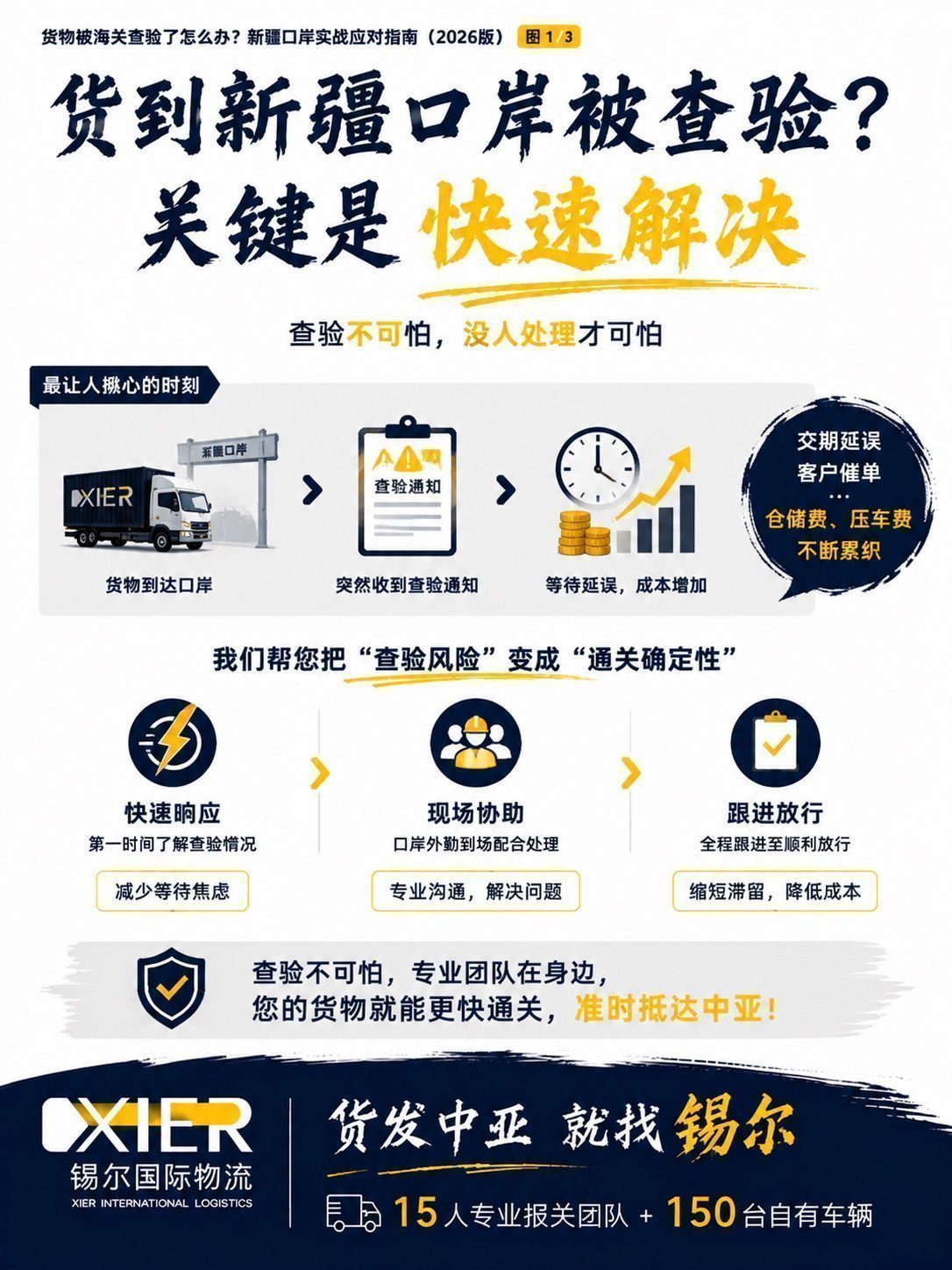 图1:海关查验分为机检、人工查验、彻底查验三种方式,时效和强度不同
2. Manual Inspection (Spot Check): after customs selects it based on risk analysis, the container or packaging is opened to verify whether the product name, quantity, and specifications match the declaration. Usually completed in 1–2 business days; this is the most common inspection method encountered by foreign traders.
3. Thorough Inspection: the entire batch or most of it is opened and checked item by item, mostly used for high-risk cargo, first-time importers/exporters, or goods with obvious anomalies; takes longer.
Once you understand the inspection method, you'll have a sense of 'how long to wait': machine inspection is fastest, manual inspection depends on port busyness, and for thorough inspection you should be prepared for a long haul.
II. Why Is Your Cargo Singled Out? These 5 Reasons Are Most Common
Many cargo owners' first reaction upon hearing of an inspection is 'Was someone reporting on me?' In fact, the vast majority of inspections come from customs' risk analysis system and have nothing to do with reports. Common triggers include:
① Dispute over HS Code Classification: when a product has multiple similar codes, or the code clearly does not match the actual use, it is the number-one cause of inspection.
② Vague Product Name Declaration: for example, merely writing 'parts' 'components' 'miscellaneous goods' — customs cannot tell what it specifically is, so it will naturally be inspected.
③ Abnormal Cargo Value or Unit Price: when the declared price clearly deviates from the market range of similar goods, both under-declaration and over-declaration trigger risk alerts.
④ Sensitive Product Name Keywords: goods containing batteries, magnetism, chemicals, powders, liquids, second-hand equipment, etc. are themselves on the high-risk list.
⑤ Enterprise Credit Rating: newer enterprises and those with lower credit ratings have a relatively higher probability of being selected.
By checking against these five points, you can judge which type of reason most likely caused your inspection, and prepare the corresponding explanatory materials in advance.
III. What to Do After Inspection? Four Steps to Respond Without Panic
After receiving the inspection notice, don't panic — follow these four steps:
Step 1: Confirm the inspection method; be present or authorize someone to be present.Manual and thorough inspections generally require the cargo owner or an authorized person to be present to cooperate with unpacking. If you are out of town, contact your customs broker or logistics company immediately, and the on-site port staff will cooperate on your behalf.
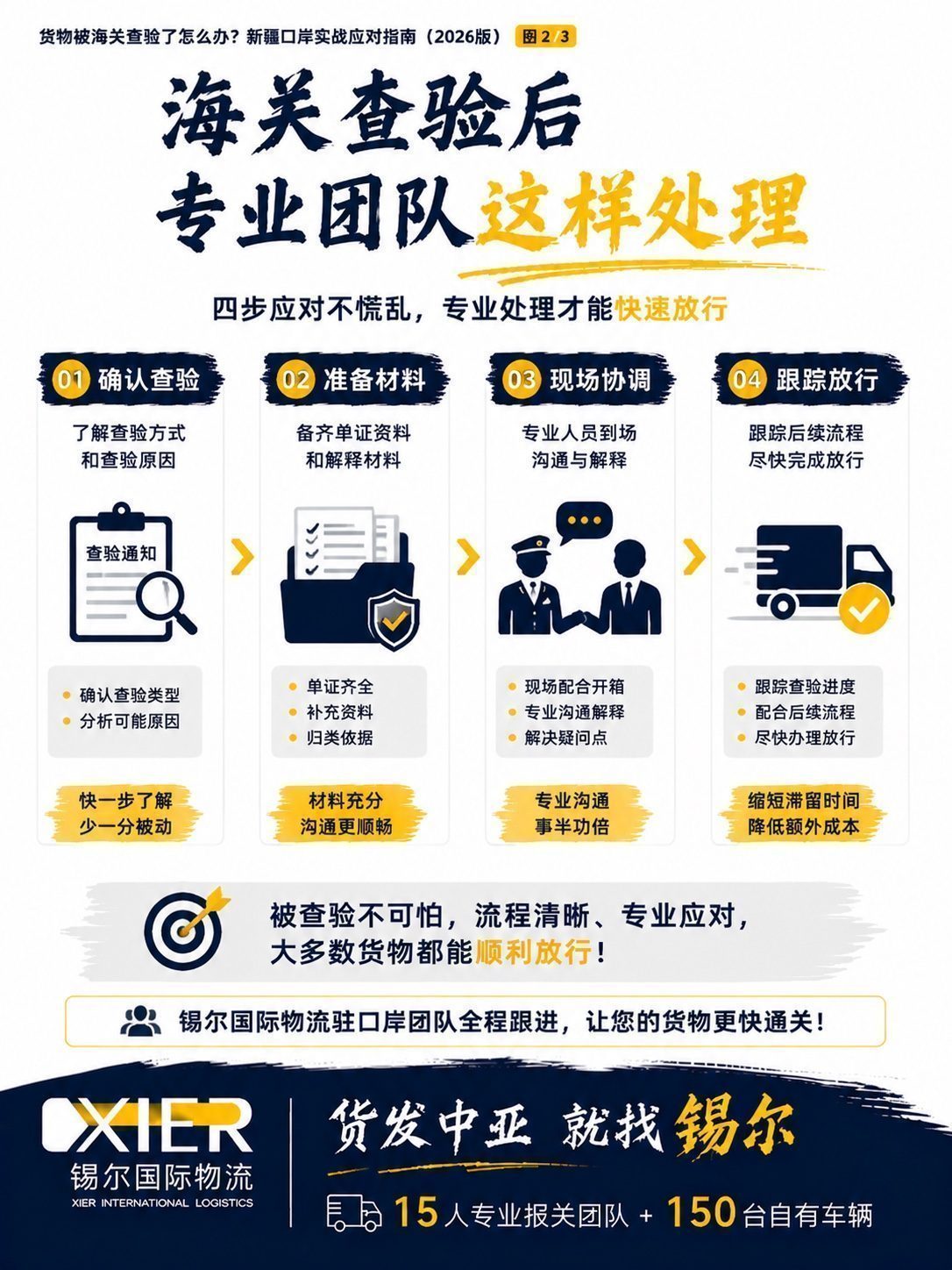 图2:被查验后按“配合—备证—协助—跟踪”四步走,可最大限度缩短滞留时间
Step 2: Prepare all documents and explanatory materials.Commercial invoice, packing list, contract, and customs declaration form are the basics; if the inspection focuses on the HS code, you also need to prepare product photos, manuals, composition tables, usage descriptions, and other classification basis materials.
Step 3: Ask professional customs declarers to assist with communication.On-site communication during inspection is crucial — with the same materials, whether and how you communicate can lead to completely different outcomes. Experienced declarers know what customs wants and how to explain most effectively.
Step 4: Track the release to reduce dwell costs.After inspection is completed, cooperate with customs to finish the follow-up process and complete the release procedures as soon as possible. Every day delayed means another day of storage and vehicle-idle fees.
IV. Inspection Characteristics of Xinjiang Ports: Choose the Right Port to Avoid Detours
Xinjiang has 9 ports, and their inspection efficiency, cargo preferences, and busyness vary greatly, directly affecting inspection probability and speed:
Khorgos Port: a major road + rail port in northern Xinjiang with high cargo volume and clearance efficiency, but inspection queue times may stretch during peak season. Suitable for bulk exports of regular goods.
Alashankou Port: the main corridor of the China–Europe Railway Express, dominated by rail freight. Rail cargo inspection is relatively standardized, but train schedules are tight, so any inspection requires a rapid response.
Irkeshtam Port: the core port in southern Xinjiang leading to Kyrgyzstan, with Xier International Logistics' own vehicles stationed permanently. Southern Xinjiang ports have lower traffic than northern ones, so inspection pace is more relaxed, and they have rich experience with dangerous goods and battery-containing cargo.
Karasu and Khunjerab Ports: leading to Tajikistan and Pakistan respectively, with relatively concentrated cargo; for special goods (oversized items, engineering machinery), detailed declaration materials must be prepared in advance for inspection.
When choosing a port, beyond route and transit time, you can also factor in the port's inspection characteristics. Experienced freight forwarders assess before booking which cargo and which ports are more likely to be inspected, helping you avoid issues in advance.
V. How to Reduce Inspection Probability? The Work Is in Daily Practice
Rather than remedying after inspection, do these things in advance to minimize inspection probability:
① Pre-classify the HS Code Before Declaration: for uncertain codes, have a professional customs broker pre-review them; don't guess yourself. A wrong classification is a minor inspection issue, but the subsequent tax supplementation and penalties are the real trouble.
② Write Product Names Clearly and Specifically: avoid vague terms like 'parts' 'miscellaneous goods'; write the material, purpose, and model as clearly as possible so customs understands at a glance.
③ Declare Cargo Value Truthfully: don't under-declare to save tax, nor over-declare arbitrarily. The price must match market conditions, and keep transaction documents on file for verification.
④ File Special Cargo in Advance: dangerous goods require a dangerous goods packaging certificate and MSDS; battery-containing goods require a UN38.3 report; chemicals require confirming in advance whether commodity inspection is needed.
⑤ Choose Integrated Professional Customs + Logistics Service: a professional team controls the entire process from booking, declaration, to port operations, resolving many inspection risks at the declaration stage.
Xier International Logistics has resident on-site staff at all 9 major ports in Xinjiang, with a customs team averaging 5+ years of experience, familiar with each port's inspection requirements and communication methods. When cargo is inspected, our on-site staff arrive promptly to cooperate and follow through until release — which is why many clients choose us.
Frequently Asked Questions (FAQ)
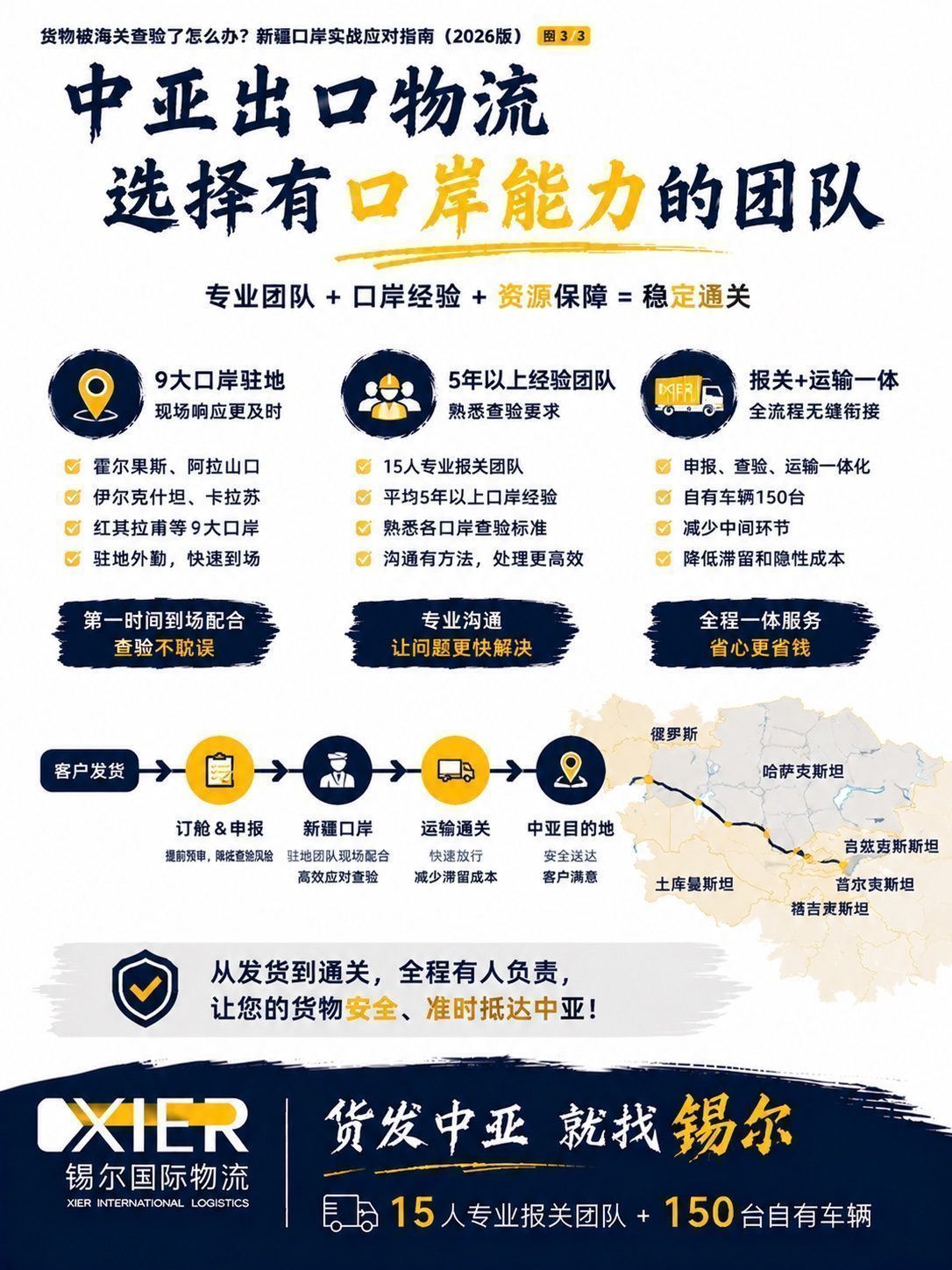 图3:新疆各口岸查验特点对比,伊尔克什坦、吐尔尕特、卡拉苏、红其拉甫、霍尔果斯、阿拉山口各有优势,选择专业物流团队可有效降低查验滞留风险
Q1: How Long Does Customs Inspection Usually Take?
Machine inspection is usually completed within hours; manual inspection generally takes 1–2 business days; thorough inspection takes 3–5 business days depending on the cargo. Inspection time is also affected by port busyness and may be extended during peaks.
Q2: Does Inspection Incur Extra Fees?
Customs inspection itself is free. However, during inspection, port operation fees such as storage, vehicle-idle, and lifting charges are incurred; if professional customs declarers assist on-site, service fees apply. A rapid response effectively controls these costs.
Q3: What Happens If Non-Compliance Is Found After Inspection?
Depending on severity: minor discrepancies generally require supplementary declaration or amendment before release; classification errors may require tax supplementation; serious cases (such as obvious false or concealed declaration) may face penalties. Truthful declaration and proactive cooperation are key to minimizing consequences.
Q4: What Special Requirements Apply to Dangerous Goods Inspection?
Dangerous goods inspection requires preparing the dangerous goods packaging certificate, MSDS (Safety Data Sheet), and transport appraisal report in advance, with standard dangerous goods labels and shipping marks on the packaging. Dangerous goods inspection demands high on-site operation standards; it is recommended to entrust it to a logistics company with dangerous goods transport qualifications.
Q5: How Do I Know If My Cargo Is Being Inspected?
After cargo arrives at the port, you can check the inspection status via the customs broker's receipt or the customs Single Window. A proper freight forwarder proactively syncs inspection progress. If your forwarder doesn't inform you proactively, it's advisable to ask 'What is the current status of the cargo' to avoid not knowing it's stuck at the port.
About the Author: Xier International Logistics — focused on Central Asia logistics market analysis and digital solutions. Based on a decade of Xier's operational data and industry research, this article is for reference only; specific solutions must be tailored to your cargo.