I. Why Risks in Central Asia Exports Are More Easily "Invisible"
The Central Asia direction mostly uses land ports with multimodal transport, and the chain is far longer than pure sea freight: domestic consolidation → local customs declaration → port clearance → overseas transshipment/clearance → door-to-door sign-off. At any stage, if documents or packaging fail, goods may be stuck at the port for days and the delivery date goes out of control. The three types of pitfalls companies most often hit are:cargo delay(port detention, missed delivery date),cargo damage(long-distance jolting, inadequate reinforcement),customs detention(wrong HS code, incomplete documents, non-standard dangerous goods declaration). Handling risk before shipment costs an order of magnitude less than firefighting at the port—and the premise of front-loading is to first see clearly at which link each risk gets stuck, then decide where to invest.
II. Cargo Delay: Turn the "Uncontrollable" into "Predictable"
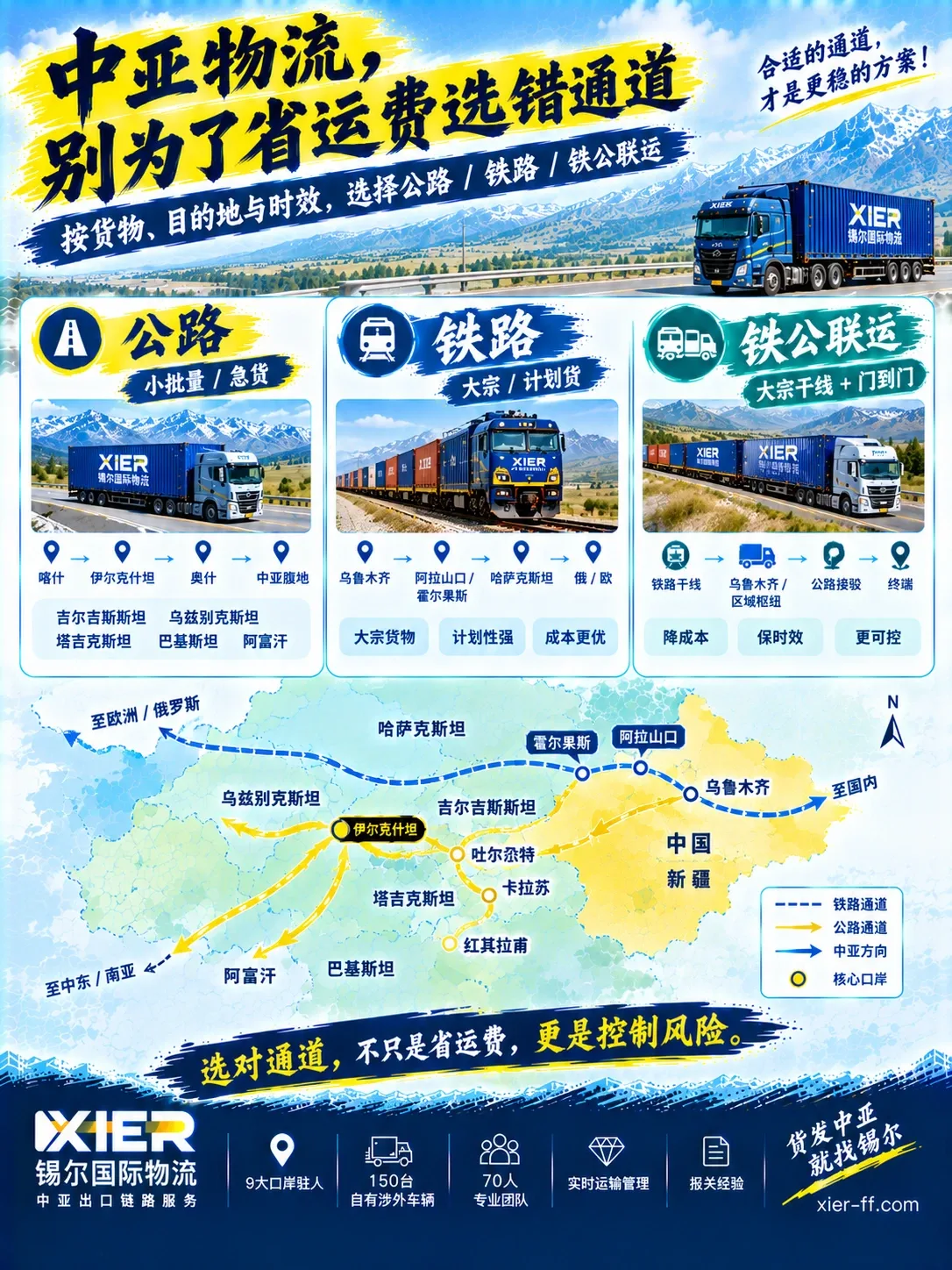
Most delays are not from slow trucks but from getting stuck at clearance and transshipment. Taking cargo to Kyrgyzstan, Uzbekistan, Tajikistan, Pakistan, and Afghanistan as examples, choosing the right exit port directly determines timeliness: in southern Xinjiang,Irkeshtam Porthas achieved 7×24 hour on-arrival inspection, with single-vehicle inspection compressed to within 3 minutes—the smoothest port for Uzbekistan (Tashkent) and southern Kyrgyzstan; Torugart is closest to Kashgar, faster for urgent replenishment to Bishkek; Karasu connects to Tajikistan; Khunjerab goes to Pakistan. With on-site port follow-up, inspection anomalies are handled on the spot—no waiting for instructions, no phone back-and-forth—this is the key to compressing delays from "days" to "hours." For detailed port-selection logic, refer toIrkeshtam Port Freight Guide。
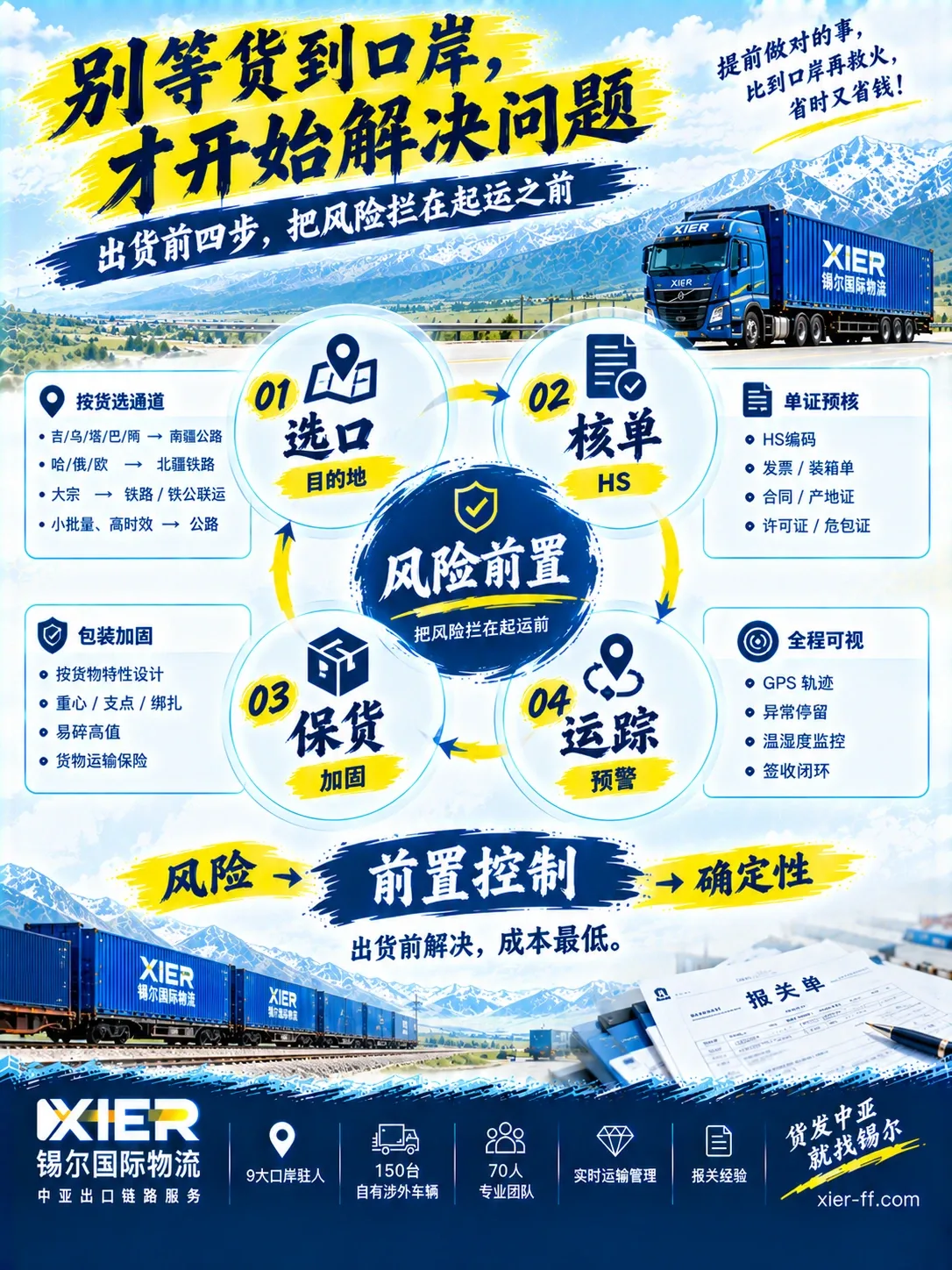
If cargo goes by rail or in bulk, the layout shifts a gear: Urumqi is the Central Asia multimodal hub, enabling rail + road relay, suitable for cost-sensitive large volumes; in northern Xinjiang,Khorgosis the China–Europe freight train and dual rail-road corridor, the smoothest for Kazakhstan and farther Europe,Alashankouis the main rail corridor. The core is not "which port is fastest" but "choose the right corridor by cargo and destination"—choose wrong, and you either detour and spend two extra days or can't get a slot in peak season. In practice, doing export pre-declaration 7–10 days before shipment, pre-classifying the HS code in advance, and confirming destination clearance requirements can eliminate most detention before departure.
III. Cargo Damage: Packaging Reinforcement + Visible Tracking, Double Insurance
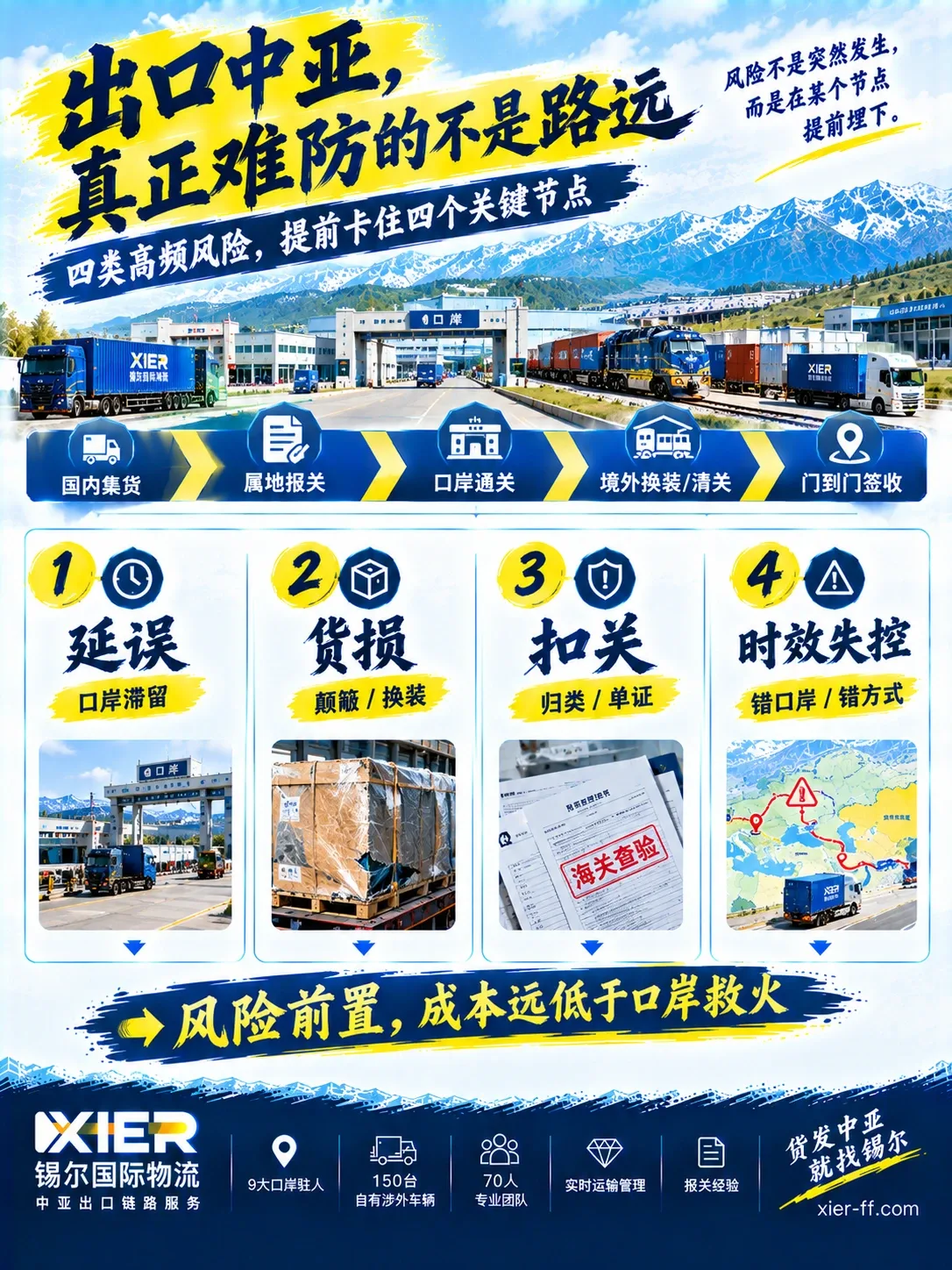
Central Asia land transport often spans thousands of kilometers, including the long slopes of the Pamir Plateau and transshipment stages, where jolting and handling are routine. Electromechanical equipment, glass and ceramics, and liquid chemicals (within compliant packaging) are most vulnerable. Reducing damage relies on three things: first, design lashing and reinforcement plans by cargo characteristics, and route oversized pieces through dedicated channels with advance booking; second, buy cargo insurance for fragile and high-value goodscargo transport insurance, clarifying the claim scope and deductible; third, full GPS tracking, with instant alerts for abnormal stops and temperature/humidity breaches rather than finding problems at sign-off. Reinforcement is not "wrap a few more turns" but a force design based on center of gravity, support points, and lashing points—wooden crates warping from moisture, wire ropes bruising corners, and stacking crushing the bottom layer are three high-frequency damage points; having someone with field experience review the loading plan before shipment is far more worry-free than claiming afterward. For insurance types and claim essentials, seeHow to Buy Central Asia Freight Insurance。
IV. Customs Detention: Documents First, Highest Compliance Certainty
The most common causes of detention are wrong HS code entry, invoice/packing list inconsistent with actual goods, and missing permits or dangerous goods packaging certificates. For sensitive cargo such as chemicals, battery-containing goods, and food, whether declaration is standardized directly decides release: dangerous goods require dedicated declaration with UN number and dangerous goods packaging certificate ready; food and agricultural products go through designated supervised sites and quarantine documents. Front-loading "whether declaration is correct" to the Kashgar local customs declaration stage, with a customs team of over 5 years of experience doing classification and document pre-check, saves at least 2–3 days versus being inspected and revising documents at the port. For dangerous goods practice, seeCentral Asia Dangerous Goods Road Transport Practice, and for the full customs declaration and inspection process, seeCentral Asia Export Customs Declaration and Inspection Guide。
It is recommended to make a self-check list before each shipment: 1 whether the HS code matches the actual goods; 2 whether the invoice, packing list, and contract quantity/weight are consistent across the three documents; 3 whether the destination country requires an export license or certificate of origin; 4 whether sensitive goods have dangerous goods packaging/quarantine documents ready; 5 whether the marks correspond to the packing list. Passing all five greatly reduces detention probability.
V. Rail or Road? Choose the Corridor by Cargo, Don't Sacrifice Control for Cheapness
Many companies force a single corridor to save freight, only to miss peak-season slots or get stuck at inspection, ending up more expensive. Simple rule: small volume, high timeliness, door-to-door—prioritize road (same-day clearance via southern Xinjiang ports like Irkeshtam); bulk, medium timeliness, cost-focused—prioritize rail (consolidate in Urumqi, transship and exit via Khorgos or Alashankou); urgent replenishment or loose pieces—consider TIR road direct. A steadier approach is rail-road multimodal relay—rail pulls bulk to the hub, road does last-mile door-to-door, balancing cost and control. Choosing the wrong corridor, the remediation cost often exceeds the freight saved; before shipment, have the logistics provider give a "timeliness + cost" dual-calculated route by cargo type and destination, steadier than deciding yourself.
Frequently Asked Questions
Q1: When cargo is detained at the port, which step usually goes wrong?
A: Over 80% get stuck at documents or classification—wrong HS code, invoice quantity inconsistent with actual goods, missing permits; a few get stuck at transshipment scheduling or extreme weather. Doing document pre-check plus HS pre-classification before shipment minimizes detention probability and avoids being stuck for days in peak season.
Q2: For shipments to Uzbekistan or Kyrgyzstan, which port is fastest?
A: For Tashkent, prioritize Irkeshtam (the southern Xinjiang mainstay of the China–Kyrgyzstan–Uzbekistan corridor, 7×24 on-arrival inspection); for Bishkek, prioritize Torugart (closest to Kashgar, fastest timeliness). When unsure, set the port by destination to avoid detours and duplicate declaration, keeping the overall chain shorter.
Q3: How to prevent cargo damage in long-distance trucking?
A: Do lashing and reinforcement by cargo type; route oversized equipment through dedicated channels with advance booking; buy cargo transport insurance for fragile and high-value goods, clarifying the deductible; full GPS tracking with anomaly alerts catches problems early and handles them early, rather than discovering at sign-off.
Q4: Can dangerous goods or chemicals go through southern Xinjiang ports? How to declare without getting stuck?
A: Yes. You must have the UN number, dangerous goods packaging certificate, and dedicated declaration ready, and use routes with dangerous goods qualifications; front-loading classification and document pre-check to the local declaration stage greatly reduces port inspection rejection rates, letting sensitive goods pass in one go.
Q5: How to make full-process timeliness predictable and never drop the chain?
A: The three essentials—HS pre-classification and document pre-check before shipment, on-site port handling, and GPS tracking node reporting with anomaly alerts. Choose a logistics provider with staff at nine major ports, 150 self-owned foreign-trade vehicles, and a customs team of over 5 years, for a steadier chain. For a customized plan, contact 18195891000 directly.
About the Author: Xier International Logistics — focused on Central Asia logistics market analysis and digital solutions. Based on a decade of Xier's operational data and industry research, this article is for reference only; specific solutions must be tailored to your cargo.