For Central Asia exports, customs inspection is an unavoidable step. But the same cargo may be selected for inspection in Kazakhstan yet pass freely in Uzbekistan — the four countries' inspection logic, trigger mechanisms, and high-frequency rejection grounds differ. Failing to understand these differences leads to delays of days at best, or whole-batch return or fines at worst.
This article takes the four major destination countries — Kazakhstan, Kyrgyzstan, Tajikistan, and Uzbekistan — as objects, making a horizontal comparison from three dimensions: inspection trigger mechanisms, high-frequency rejection reasons, and compliance recommendations, to help exporters understand each country's rules in advance and prepare purposefully before shipment.
I. Comparison of Customs Inspection Trigger Mechanisms Among the Four Countries
Customs inspection mechanisms vary greatly among countries: some rely mainly on random checks, some on risk assessment, and some use document review as the first gate. Only by understanding the trigger mechanism can you predict the probability of goods being inspected in advance.
Kazakhstan has a relatively mature inspection system. Rail ports are generally equipped with H986 large container X-ray scanning equipment, and most goods are inspected by machine without manual unpacking. For goods flagged as "high risk" by the system (such as high-value electronics, food, and agricultural products), customs will arrange manual inspection or sampling for testing. Overall inspection triggers combine random sampling and risk control; experience shows the inspection rate for ordinary goods is about 15% to 20%.
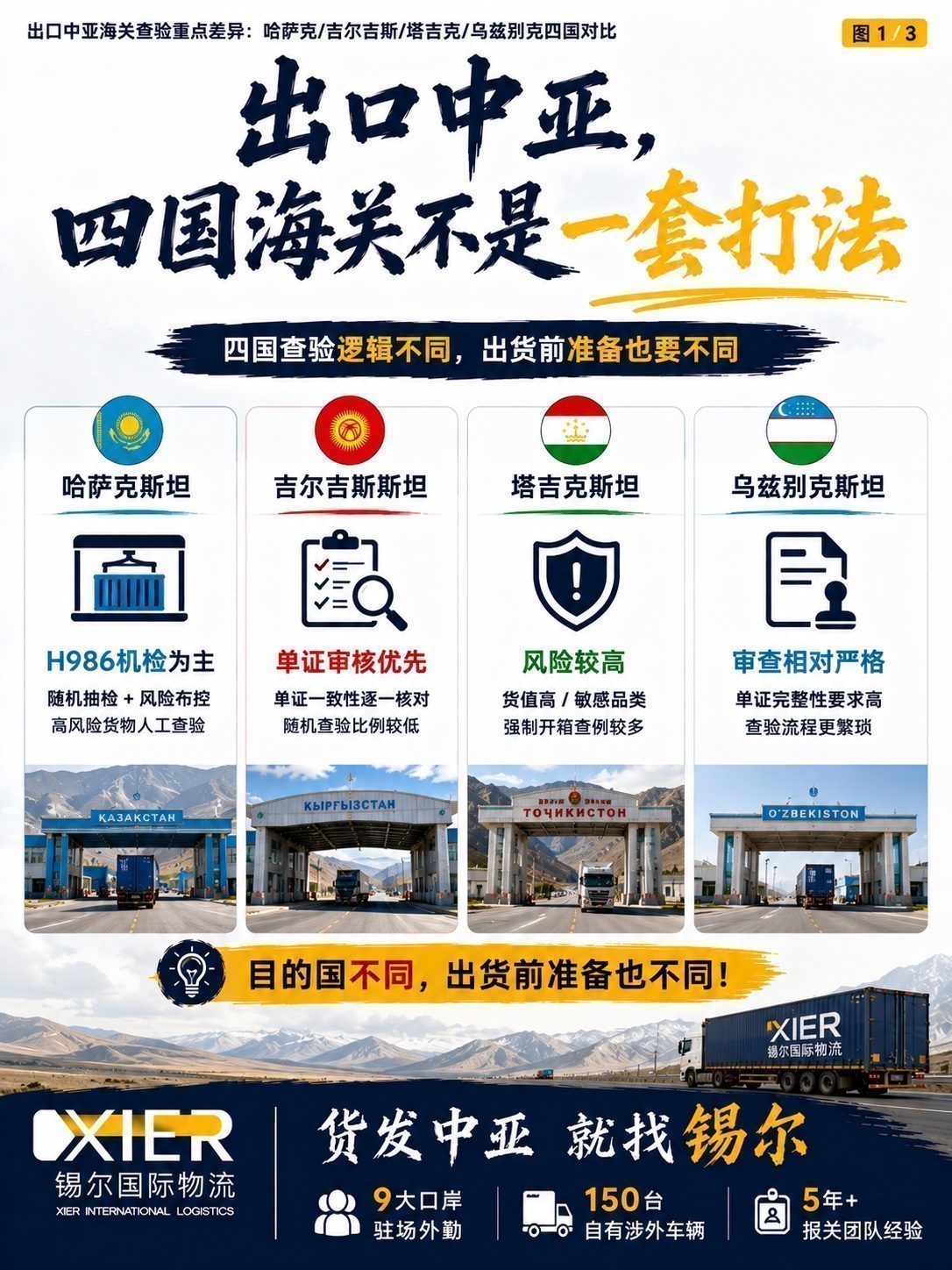
Kyrgyzstan places more emphasis on document review; border customs will check the consistency of the packing list, invoice, and actual goods one by one. The random inspection ratio is about 10% to 15%, but if there is any inconsistency between documents, inspection is almost inevitable.
Tajikistan 's inspection trigger mechanism comprehensively considers the cargo value and commodity category; goods with higher value or belonging to sensitive categories have a significantly higher inspection rate. Some agricultural products, food, and chemical products are required to undergo mandatory unpacking inspection, with an overall inspection rate of about 20% to 30%, making it one of the countries with higher inspection ratios among the four.
Uzbekistan has the strictest customs inspection system, implementing a relatively comprehensive review mechanism. The country has continued to advance customs reform in recent years, but the overall inspection process remains cumbersome, with high requirements for the completeness and accuracy of documents, and goods often wait longer for inspection at its border than in other countries.
II. High-Frequency Rejection Reasons and Compliance Recommendations in the Four Countries
After inspection is triggered, what are the most common rejection reasons? The following are the most common high-frequency rejection grounds of the four countries' customs, arranged by frequency of occurrence.
| Rejection Grounds | Kazakhstan | Kyrgyzstan | Tajikistan | Uzbekistan |
|---|---|---|---|---|
| HS code error or mismatch | ⭐⭐⭐⭐ High incidence | ⭐⭐⭐ High incidence | ⭐⭐⭐ High incidence | ⭐⭐⭐⭐ High incidence |
| Documents inconsistent with actual goods (weight/quantity/shipping mark) | ⭐⭐⭐ High incidence | ⭐⭐⭐⭐ High incidence | ⭐⭐⭐⭐ High incidence | ⭐⭐⭐⭐ High incidence |
| Missing certificate of origin or non-standard format | ⭐⭐⭐ Medium incidence | ⭐⭐⭐ Medium incidence | ⭐⭐⭐⭐ High incidence | ⭐⭐⭐⭐ High incidence |
| No quarantine certificate for food/agricultural products | ⭐⭐ High frequency | ⭐⭐⭐ High incidence | ⭐⭐⭐⭐ High incidence | ⭐⭐⭐⭐ High incidence |
| Dangerous goods not declared as dangerous goods | ⭐⭐⭐⭐ High incidence | ⭐⭐⭐⭐ High incidence | ⭐⭐⭐ High incidence | ⭐⭐⭐⭐ High incidence |
| Missing import license or quota certificate | ⭐⭐ Low incidence | ⭐⭐⭐ Medium incidence | ⭐⭐⭐⭐ High incidence | ⭐⭐⭐⭐ High incidence |
| ATA Carnet / TIR Carnet not activated | ⭐⭐⭐ Medium incidence | ⭐⭐ Low incidence | ⭐⭐⭐ Medium incidence | ⭐⭐⭐ Medium incidence |
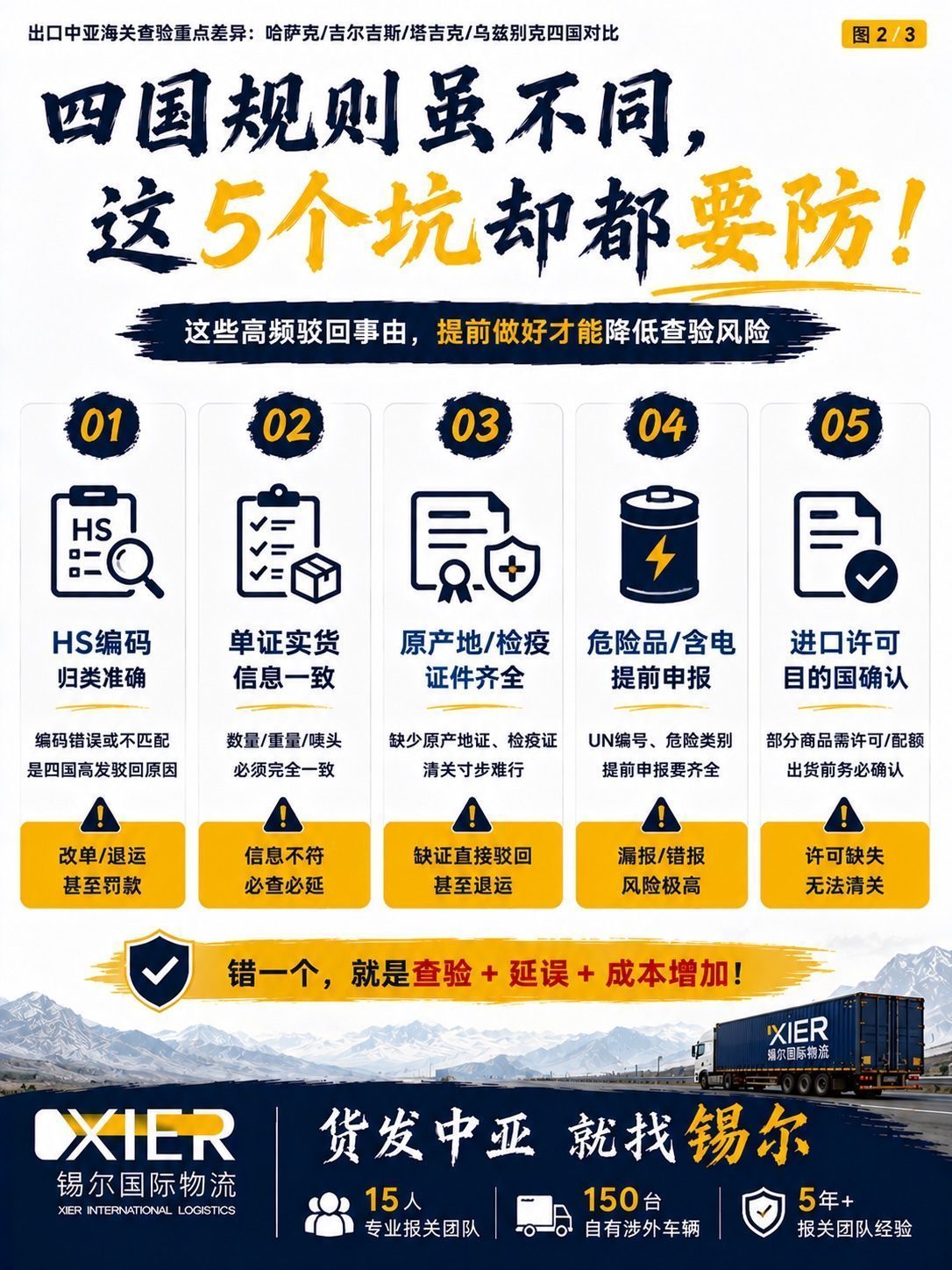
Based on the above high-frequency rejection grounds, the following compliance recommendations can help exporters reduce inspection rejection risk in advance:
First, double-confirm the HS code without fail.Kazakhstan and Uzbekistan have the strictest requirements for HS code accuracy; coding errors not only mean re-filing but may also be deemed by customs as intentional under-declaration of value, leading to fines. It is recommended to contact a professional customs broker familiar with the destination country's customs regulations before shipment to re-check the HS code. Xier International Logistics' customs team has resident staff at core ports such as Khorgos and Alashankou, has built an HS code database covering major Central Asian goods, with a coding error rate below 0.5%.
Second, document-actual goods consistency is a common red line for all countries.This is the most frequent rejection ground among the four countries' customs, bar none. The quantity, gross/net weight, and shipping marks on the invoice must be completely consistent with the actual packing. Consolidated cargo is especially prone to problems; goods from different shippers must be marked in separate boxes to avoid confusion.
Third, quarantine certificates for agricultural and food goods are indispensable.Tajikistan and Uzbekistan have the strictest quarantine requirements for imported agricultural and food products; goods lacking quarantine certificates basically cannot be cleared, and some even face return. For such products, be sure to understand the destination country's quarantine requirements in advance before shipment and allow sufficient processing time.
Fourth, dangerous goods must be declared in advance.All four countries require dangerous goods to indicate the UN number and hazard class in the waybill and accompanying documents. Xier International Logistics holds dangerous goods transport qualifications, and its dangerous goods declaration team has an average of over 5 years of experience, assisting customers in completing dangerous goods classification identification and preparing complete declaration materials before shipment.
Fifth, understand each country's import license requirements.Tajikistan and Uzbekistan implement import license or quota management systems for some categories; before export, confirm whether the goods belong to controlled categories. As a member of the Eurasian Economic Union (EAEU), Kazakhstan's import license system for some goods is consistent with Kyrgyzstan's, but overall management is relatively lenient.
III. Xier International Logistics' Assistance Capabilities in the Four-Country Direction
Facing the different inspection logics and rejection rules of the four Central Asian countries, having a service provider familiar with local operations assist you is the most effective way to minimize inspection risk. Xier International Logistics' assistance capabilities at major ports are as follows:
Although the inspection rules of the four countries differ, one point is common:The more thorough the document preparation, the lower the probability of inspection and the risk of delay.Doing three things before shipment — HS code verification, document-actual goods consistency check, and pre-confirmation of destination country special requirements (quarantine/license/dangerous goods declaration) — is far more reassuring and cost-saving than trying to remedy at the port after the goods arrive.
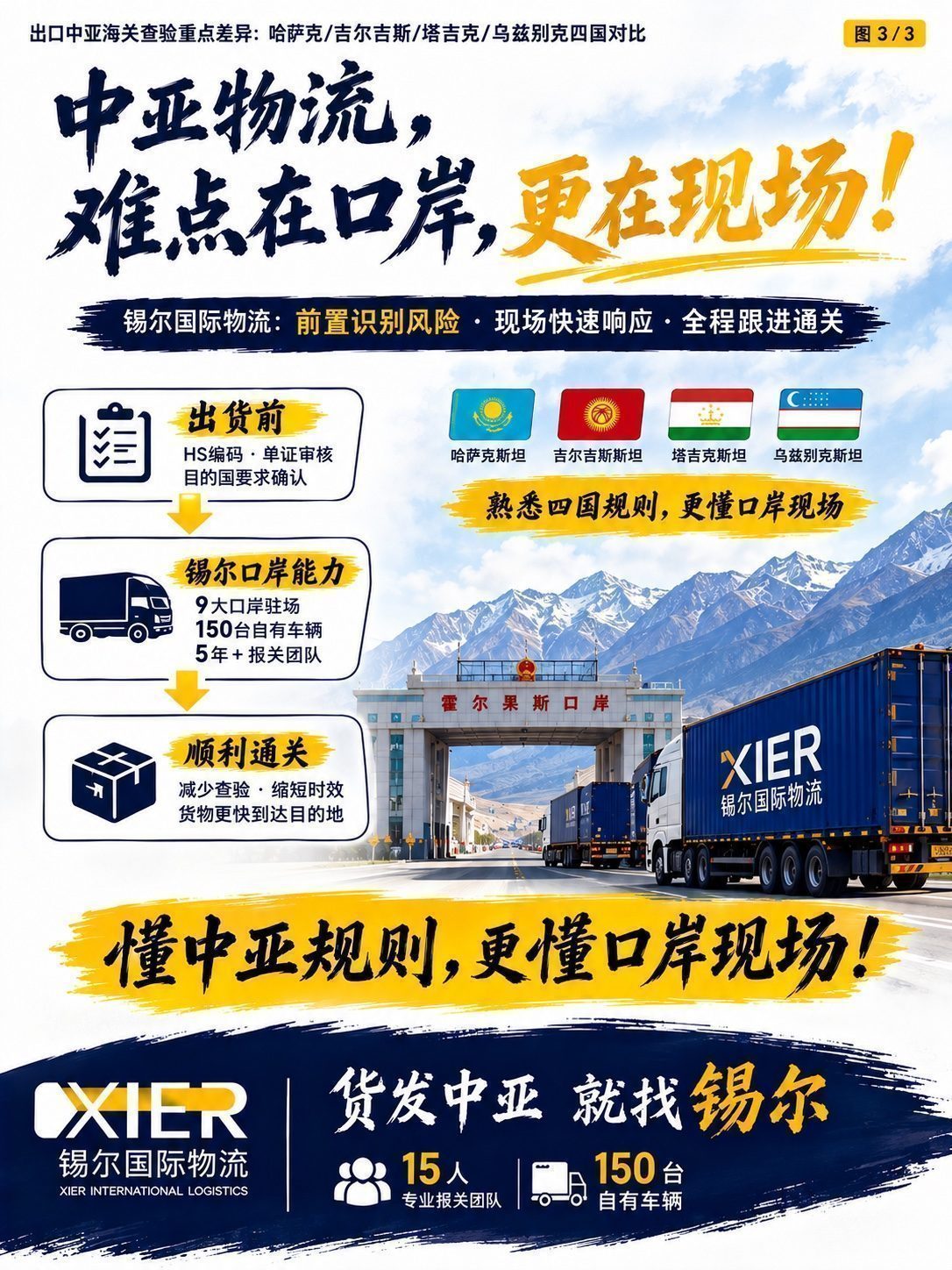
Having been deeply engaged in Central Asia logistics for many years, Xier International Logistics has dedicated field staff at nine major Xinjiang ports including Khorgos, Alashankou, Irkeshtam, and Torugart, owns 150 foreign-related transport vehicles, and has a customs team with an average of over 5 years of experience. For inspection assistance needs, please feel free to contact us at any time.
Frequently Asked Questions
Is the same HS code universally applicable in both Kazakhstan and Uzbekistan?
Not absolutely. Both Kazakhstan and Uzbekistan adopt the Harmonized System (HS), but the two countries' customs code sub-items and regulatory conditions differ. For the same category of goods, Kazakhstan may enjoy a lower tax rate, while Uzbekistan may list it as a controlled item requiring an additional import license. It is recommended to confirm code accuracy with the customs authorities or professional customs brokers of both countries before shipment.
What quarantine documents are required for food shipments to Tajikistan?
For food shipments to Tajikistan, you usually need to provide a phytosanitary certificate or veterinary health certificate issued by the exporting country's official authority (depending on the commodity category), as well as a commercial invoice, packing list, and certificate of origin. Tajikistan has relatively strict quarantine review for food imports; food goods lacking quarantine certificates basically cannot be cleared. It is recommended to process quarantine procedures with a professional agency at least two weeks in advance.
What declaration materials are required for exporting dangerous goods to the four Central Asian countries?
All four countries require the UN number, hazard class, and packaging group to be indicated in the waybill and accompanying documents; hazardous chemicals also require a Material Safety Data Sheet (MSDS). Xier International Logistics holds dangerous goods transport qualifications and is equipped with a professional dangerous goods declaration team, assisting in completing the dangerous goods packaging certificate, MSDS preparation, and UN label affixing before shipment, ensuring compliant dangerous goods transport to the four countries.
What scenarios are ATA Carnets and TIR Carnets respectively applicable to in the Central Asia direction?
ATA Carnets are mainly used for temporary import and export (such as exhibition goods and samples), while TIR Carnets (international road goods transit manuals) are used for transit transport of commercial goods. Exporters using the Central Asia road direction, holding a TIR Carnet, can enjoy pre-declaration and reduced unpacking inspection clearance conveniences in Kazakhstan, Kyrgyzstan, Tajikistan, and Uzbekistan. Xier International Logistics holds both ATA Carnet and TIR Carnet qualifications.
Are the inspection waiting times very different among the four countries? How long do you generally need to wait?
The differences are significant. Kazakhstan's rail ports, due to widespread H986 machine inspection, release most goods in about 2 to 4 hours after inspection; Kyrgyzstan mainly uses document review, with inspection waiting time of about 1 to 3 days if documents are correct; Tajikistan has a higher inspection rate, with release time of about 2 to 5 days; Uzbekistan has the longest inspection waiting time, usually 3 to 7 days. Xier International Logistics has field staff at major ports to assist in following up on inspection progress and quickly responding to emergencies.
About the Author: Xier International Logistics — focused on Central Asia logistics market analysis and digital solutions. Based on a decade of Xier's operational data and industry research, this article is for reference only; specific solutions must be tailored to your cargo.