I. Why Special Cargo Easily Stumbles on HS Codes
At Central Asia land ports, ordinary cargo declaration is relatively standardized, but these three "special cargo" types — chemicals, electrical products, and food/agricultural products — are most prone to HS code filing problems. The root cause is that their classification depends not only on "what it is" but also on composition, battery type, and whether quarantine is involved. A single product name may correspond to several codes; one wrong digit may prompt customs to require a revision, at best delaying half a day and at worst holding the vehicle at the port for days. For enterprises exporting to Central Asia for the first time, special cargo declaration is often the first hurdle in clearance.
Xier International Logistics maintains long-term staff at 9 major ports, operates 150 owned foreign-related transport vehicles, and its customs team has an average of over 5 years of frontline Central Asia experience, with an HS code database covering major Central Asia ports. Below, the declaration essentials of the three cargo types are broken down one by one to help you fill the pits before shipment.
II. Chemicals: Composition Determines the Code, Vague Declaration Is Most Dangerous
The HS code for chemicals is not about the words "chemical" but about specific composition and use. In the customs tariff, chemical-related goods are mainly concentrated in Chapters 28 to 39: inorganic chemicals (Ch. 28), organic chemicals (Ch. 29), fertilizers (Ch. 31), paints and varnishes (Ch. 32), surfactants and treatment agents (Ch. 34), miscellaneous chemical products (Ch. 38), etc. The same barrel of liquid — solvent or cleaning agent — may fall under different chapters with completely different codes; the same bag of powder — raw material or finished product — also has different regulatory conditions. The easiest pit to fall into is "vague declaration" — writing product names as generic descriptions like "chemical raw materials" or "mixed preparations," which customs cannot classify specifically, leading only to return or control inspection.
The correct approach: truthfully declare the main components and content; for mixtures, determine the code by the main component; for dangerous chemicals, must attach the UN number, dangerous goods packaging certificate (performance sheet + use sheet), and MSDS; easily confused product names should be specified down to the specific chemical name rather than using industry colloquialisms to replace standard names. Xier's customs team has on-site field staff at ports such as Kashgar and Khorgos; before filing, they first compare against the code database, getting the "composition — code — regulatory condition" chain right before submission, reducing the revision rate at the source. For enterprises exporting to Central Asia, chemical declaration most taboo is "close enough is fine" — a difference of one subcategory may trigger different inspection or regulatory document requirements.
III. Electrical Products: Battery Type Is the Watershed
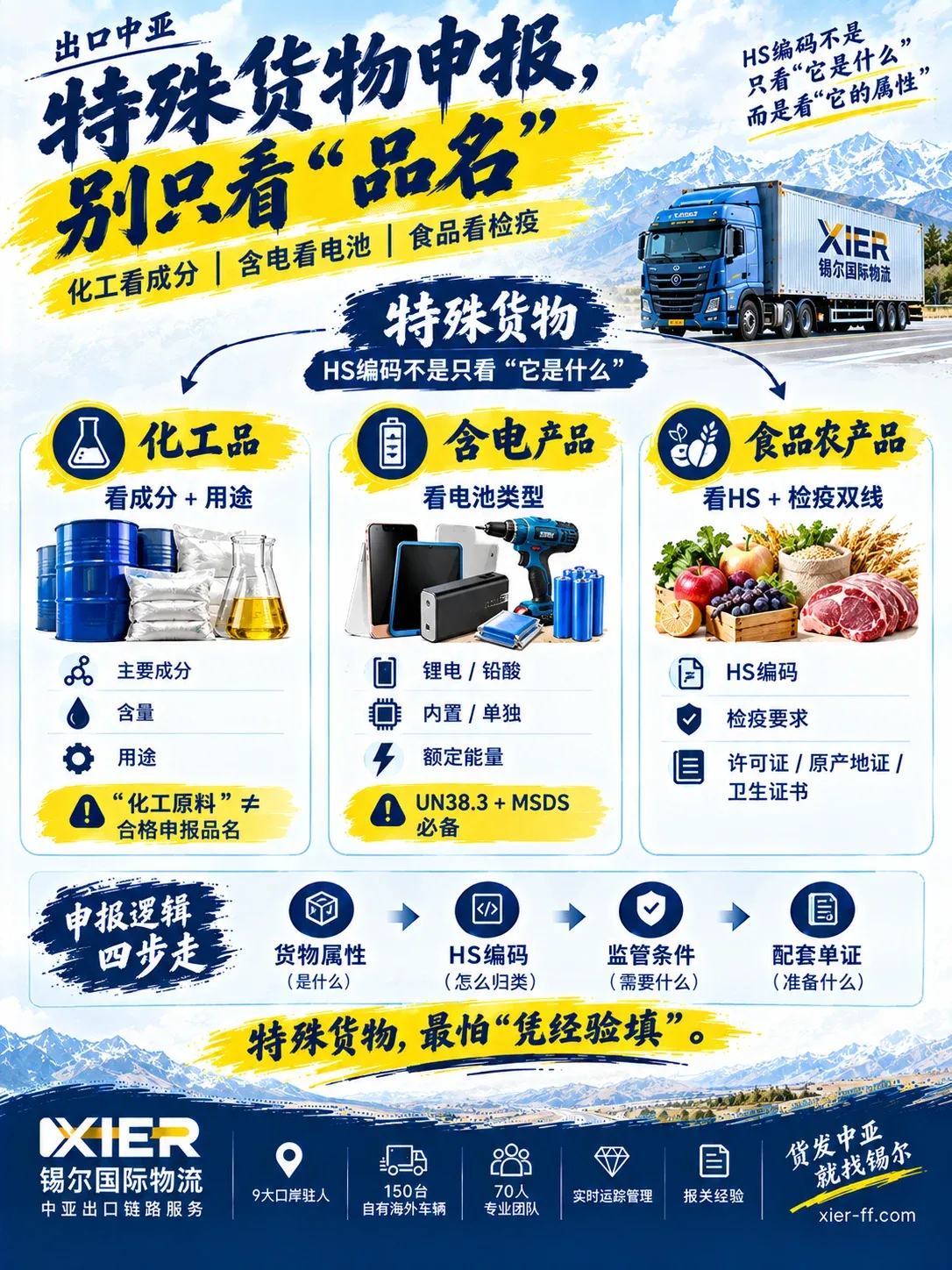 图1:特殊货物申报别只看品名——化工品看成分、含电产品看电池类型、食品农产品走检疫与HS双线,三类货物申报逻辑各不相同。
The declaration key for electrical products (mobile phones, power banks, power tools, energy storage equipment, etc.) lies in the battery type. In the tariff, batteries themselves fall under the 8506 (primary batteries) and 8507 (storage batteries) series, while devices with batteries are classified by device function (e.g., 8517 communication equipment, 8501–8503 motors). Built-in lithium batteries vs. accompanying lithium batteries, lithium-ion vs. lead-acid batteries — the regulatory logic is completely different. Goods with lithium batteries are declared under dangerous goods logic, requiring a UN38.3 test report and battery MSDS, and some also need a dangerous goods packaging certificate; different power and capacity mean different applicable transport conditions and packaging requirements. Many customers stumble by "thinking it's just ordinary electronics," only to have the port deem it non-compliant electrical cargo, holding both device and battery.
Pre-shipment advice: First confirm the battery type, rated energy, and quantity, distinguishing "battery built into the device" from "battery shipped separately"; attach the UN38.3 report and MSDS to avoid the port misjudging it as concealment. Pay special attention: the battery inside the device and the device itself must be declared separately in filing — you cannot declare the device without declaring the battery. Xier holds the scarce dangerous goods transport qualification in southern Xinjiang; electrical cargo from classification and packaging to port declaration can be handled in one stop, without the customer splitting across multiple parties, and on-site staff at the port can explain battery compliance during inspection.
IV. Food and Agricultural Products: Dual-Line Compliance of Quarantine and HS
For food and agricultural exports to Central Asia, the HS code is only one line; the other is quarantine. In the tariff, food and agricultural products are concentrated in Chapters 1 to 24: live animals (01), meat and edible offal (02), fish and shellfish (03), dairy, eggs, honey (04), edible vegetables (07), edible fruits (08), coffee, tea, spices (09), cereals (10), milling industry products (11), meat and fish products (16), fruit and vegetable products (20), beverages and alcohol (22), food industry residues (23), tobacco (24), etc. Both must be prepared in parallel: the HS code determines tariff and regulatory mode, while whether the goods can be released for entry also depends on quarantine — whether the exit goods clearance sheet (regulatory document code B), animal and plant quarantine license, certificate of origin, and health certificate are complete. Labels are also often overlooked — some Central Asian countries require Chinese-Russian bilingual labels, otherwise the goods are returned on arrival. Cold-chain foods (frozen products, fresh fruits) have finer requirements for packaging and temperature records, and incomplete documents will also cause holds.
Recommended order for food declaration: First confirm the destination country's access list and quarantine requirements, then determine the HS code, and finally prepare all quarantine documents at once. Many customers are used to finalizing the HS code and shipping immediately, only to find at the port that quarantine documents were not processed, which is actually slower. Xier has mature port operation experience in agricultural and food exports, can help customers sort out the "code + quarantine" dual list, reduce post-arrival uncertainty, and let goods pass inspection at the port in one go.
V. Pre-Shipment Self-Check List (Recommended to Post at the Shipping Desk)
Put the essentials of the three cargo types above onto one checklist, and tick each item before shipment, which can intercept the vast majority of rejections:
- Determine the attribute: First determine whether the goods are ordinary cargo, chemicals, electrical products, or food/agricultural products, then decide which declaration logic to follow.
- Verify HS Code: Cross-check against the HS code database to confirm that the product name, composition, and use are consistent with the code; do not use industry colloquialisms to replace standard product names.
- List documents: For chemical dangerous goods, prepare UN number / dangerous goods packaging certificate / MSDS; for electrical, prepare UN38.3 / MSDS and distinguish battery from device; for food, prepare quarantine license / certificate of origin / health certificate.
- Verify against physical goods: The invoice, packing list, and contract must be consistent item by item with the physical goods' name, quantity, and weight; avoid "one set of documents, one set of goods."
- Pre-review the declaration: Before filing, have an experienced customs broker review it once; port field staff confirm that the attached documents are complete before submission.
The core of this checklist is to change "ship first, supplement documents later" into "verify documents first, then ship." Xier has on-site field staff at 9 major ports; the declaration and inspection links have someone following up on the spot, able to handle problems on-site rather than communicating by phone afterward — which is the key to fewer vehicle holds for special cargo.
VI. Xier's Advantages in Special Cargo Declaration
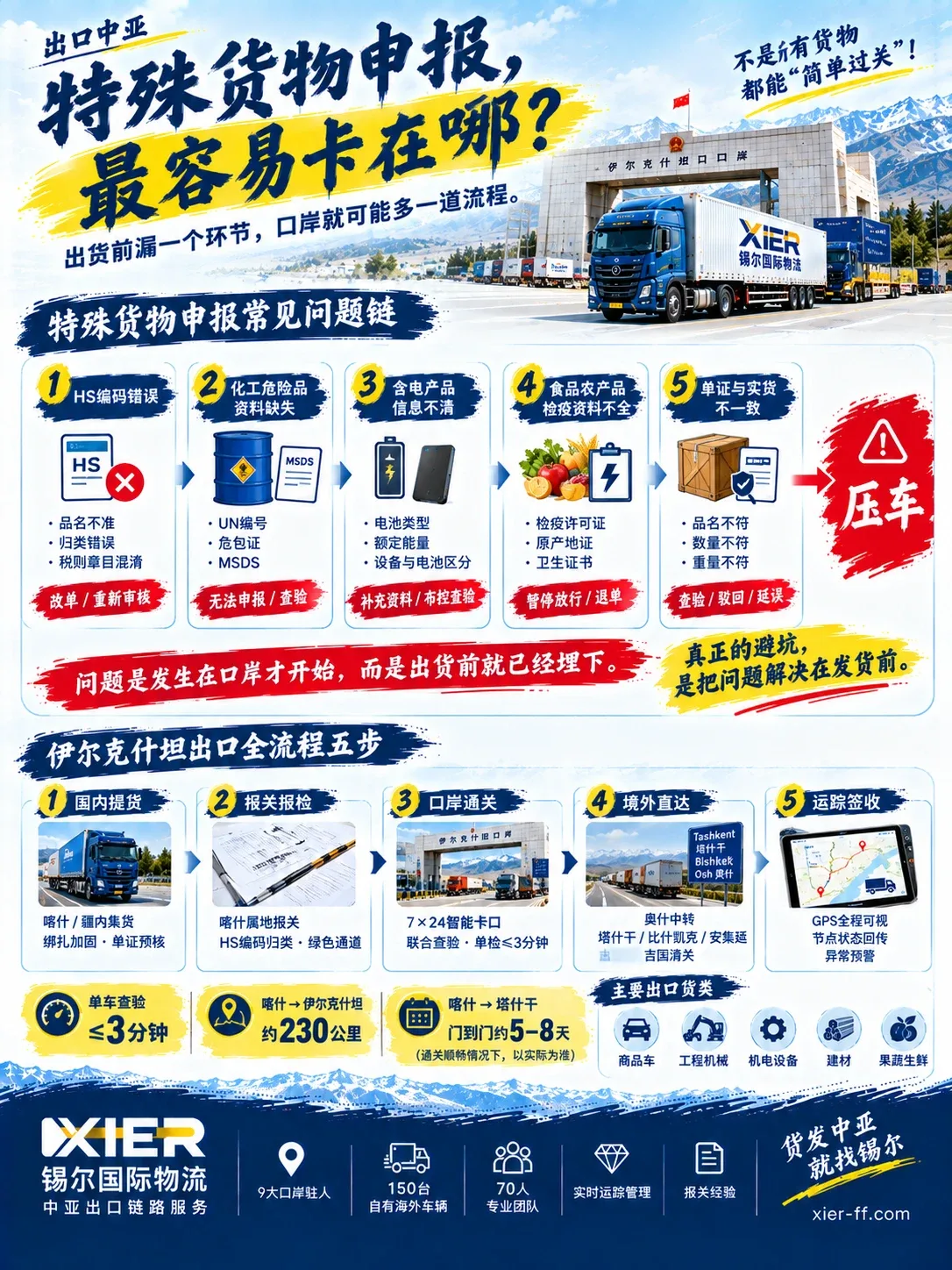 图2:特殊货物申报最容易卡在哪——HS编码错误、危包资料缺失、含电信息不清、检疫资料不全、单证与实货不符都可能压车,避坑要把问题解决在发货前。
Special cargo declaration is not about luck but about whether someone determines the attribute accurately and prepares the documents in advance. Xier International Logistics has several differentiating points on this line: First, on-site port staff — at 9 major ports (including Irkeshtam, Torugart, Karasu, Khorgos, etc.) there are long-term owned field staff who follow the entire process of goods entering the zone, inspection, and release, and can handle declaration problems on-site; second, 150 owned vehicles ensure transit time even in peak season and for urgent goods without needing to dispatch vehicles at the last minute; third, a customs team with over 5 years of experience and an HS code database covering major Central Asia ports, with classification references for chemicals, electrical, and food goods — not filled by impression; fourth, holding dangerous goods transport qualification (scarce in southern Xinjiang), so chemical and electrical cargo from classification and packaging to port declaration are fully controllable, and customers don't need to find trucks, customs brokers, and dangerous goods agents separately. For a plan, contact 18195891000.
Frequently Asked Questions
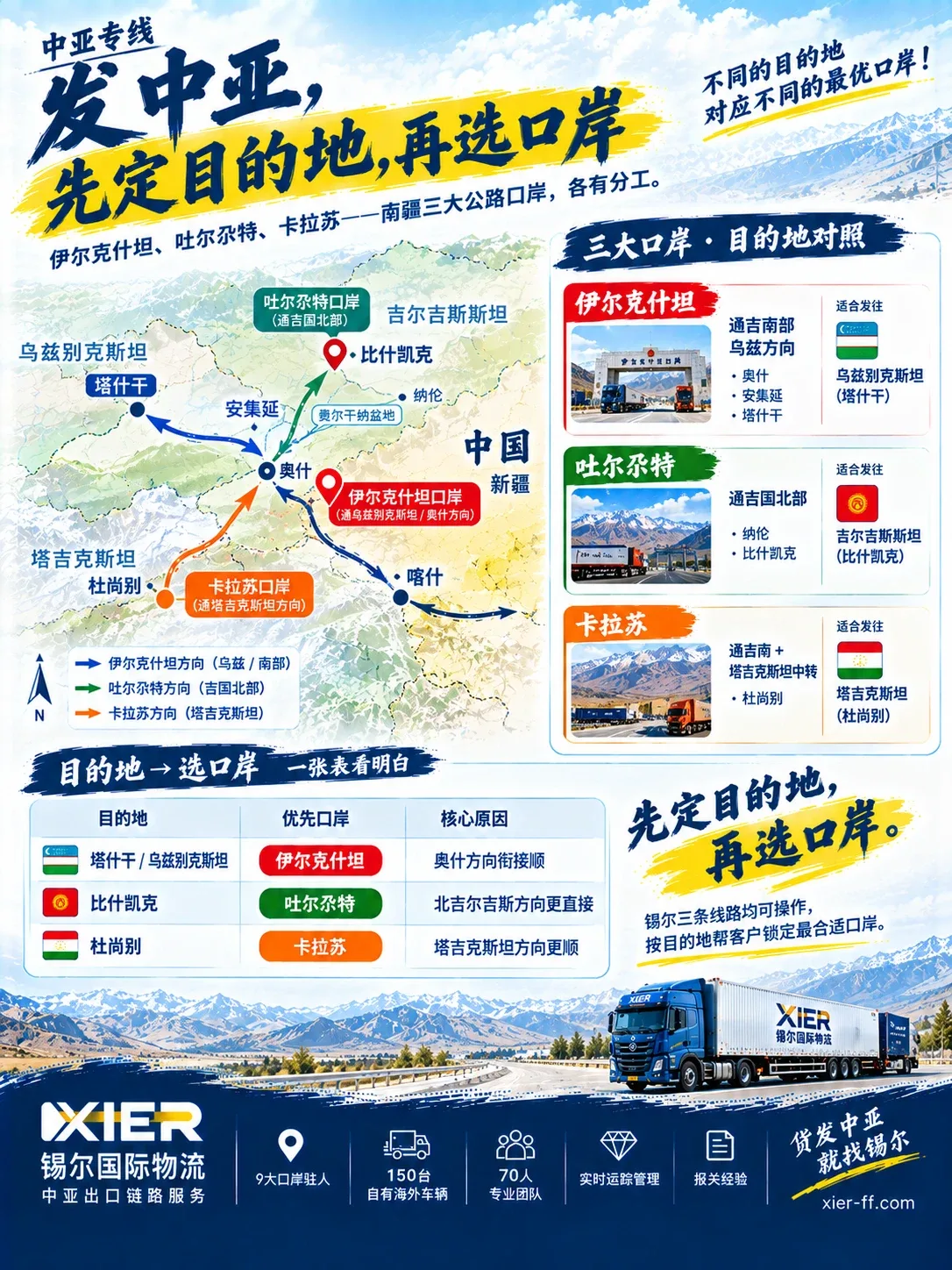 图3:发中亚先定目的地再选口岸——去塔什干/乌兹别克方向优先伊尔克什坦,去比什凯克优先吐尔尕特,去杜尚别优先卡拉苏。
Is it okay to just write "chemical raw materials" for chemicals?
Not recommended. A generic product name cannot determine classification; customs usually returns the declaration or places it under control inspection, which is actually slower. You should truthfully declare the main components and content.
Must all electrical products be declared as dangerous goods?
Goods with lithium batteries are generally handled under dangerous goods logic and require a UN38.3 report and MSDS; specifically, it depends on the battery type, energy, and transport mode, so it is recommended to have a professional team determine it before shipment.
Do food exports to Central Asia also need quarantine documents?
Yes. In addition to the HS code, usually an animal and plant quarantine license, certificate of origin, and health certificate are required, and some categories also require Chinese-Russian bilingual labels — all indispensable.
When must the dangerous goods packaging certificate be provided?
For goods involving dangerous chemicals, lithium batteries, etc. that are regulated as dangerous goods, the port declaration must attach the dangerous goods packaging certificate (performance sheet + use sheet); missing it will be deemed non-compliant declaration.
Can a wrong declaration be corrected, and how long does it take?
Declaration can be revised, but it occupies port time, from half a day at best to several days at worst. Xier's practice is to first compare against the code database and have field staff review before filing, striving for one-time passage.
About the Author: Xier International Logistics — focused on Central Asia logistics market analysis and digital solutions. Based on a decade of Xier's operational data and industry research, this article is for reference only; specific solutions must be tailored to your cargo.