I. Why More and More Goods Are Imported from Kazakhstan to China
Kazakhstan is China's largest trading partner in Central Asia. Public data shows that in 2025, China-Kazakhstan trade reached about 48.7 billion USD, of which Kazakhstan's exports to China were about 19 billion USD, with a growth rate significantly higher than bilateral imports. The main exports to China are energy and metal mineral products — crude oil, copper ore, refined copper, and natural gas together account for over 70%; meanwhile, agricultural exports performed brilliantly, reaching a record about 1.32 billion USD in 2025, with sunflower oil, rapeseed oil, and wheat bran showing prominent growth. For domestic processing plants, grain-oil enterprises, and energy traders, Kazakhstan is shifting from a "distant source country" to a "stable supply at the doorstep." But many enterprises doing imports for the first time easily apply "export to Central Asia" experience directly to "import to China," only to get stuck at port access and supervision sites.
One difference must be clarified first: For exports to Central Asia, the common routes are the southern Xinjiang road ports (Irkeshtam, Torugart, Karasu, Khunjerab); while for importing bulk goods from Kazakhstan to China, the main routes are the northern Xinjiang railway ports — Alashankou and Khorgos. Xier International Logistics has long-term staff at 9 major ports and 150 owned foreign-related vehicles, with a customs team averaging over 5 years of experience, covering both the northern Xinjiang Alashankou / Khorgos import corridors and the southern Xinjiang ports, able to help customers match the most suitable entry port by cargo type.
II. Complete Import Chain: Six Steps from Almaty to the Domestic Factory
Whether by rail or road, importing from Kazakhstan to China can be roughly broken into six steps. The connection efficiency of each step determines how long the whole shipment stays at the port.
The first step iscontract signing and access verification: Confirm whether the intended import category has obtained Chinese quarantine access (for example, among Central Asian countries, currently only some grain categories from Kazakhstan such as barley, wheat, and sunflower seeds have obtained quarantine access for export to China), and prepare trade documents. The second step istransport: Bulk cargo preferably goes by China-Europe railway trains; scattered goods can go by road trucking; the Almaty–Alashankou / Khorgos section has mature rail connection. The third step isport declaration: Declare to Chinese customs and file for inspection; documents usually need Chinese-Russian / Chinese-Kazakh bilingual. The fourth step isInspection and Quarantine: Grain, food, meat, etc. must enter through designated import supervision sites with corresponding qualifications; if the site does not match, the goods will be returned or rerouted to another port. The fifth step istax payment and release: After paying customs duties and VAT according to the tariff, customs releases the goods. The sixth step isdomestic distribution: Mostly transshipped and distributed in Urumqi, then sent to inland factories. Crude oil enters through the China-Kazakhstan crude oil pipeline at Alashankou, and copper concentrate goes through Alashankou's "bonded ore mixing" pilot; these two categories do not use ordinary road ports.
III. Alashankou and Khorgos: How to Choose Between the Two Northern Xinjiang Corridors
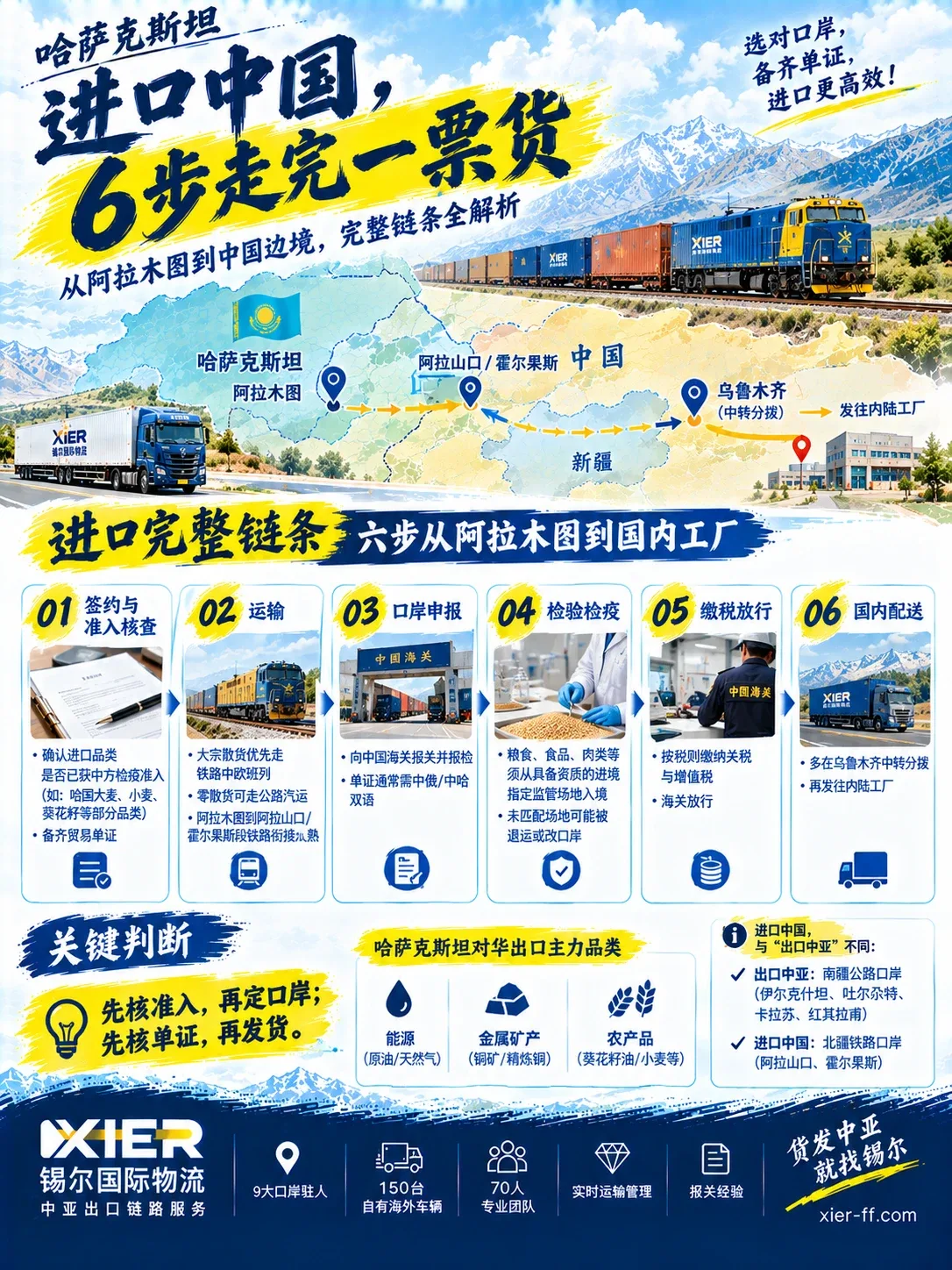 图1:哈萨克斯坦进口中国,6步走完一票货——签约与准入核查、运输、口岸申报、检验检疫、缴税放行、国内配送完整链条,关键判断:先核准入再定口岸,先核单证再发货。
For imports from Kazakhstan, the vast majority of goods enter through Alashankou or Khorgos. The two ports have different focuses. Alashankou is the "first gateway" for Xinjiang imports, both the entry point of the China-Kazakhstan crude oil pipeline and the country's first land port to pilot "bonded ore mixing" for copper concentrate, with a large normalized import scale of non-ferrous metal minerals and the most complete grain storage and processing support, and 7×24-hour rail clearance year-round. Khorgos, on the other hand, is a rail + road dual corridor; its comprehensive bonded zone's designated grain import supervision site allows imported grain to drive directly into the zone via a dedicated rail line, with imported grain "going straight to the park's processing workshop," eliminating the transloading step, and the loading/unloading and clearance of a whole grain train can be compressed to within 6 hours. Simply put: bulk energy, minerals, and grain go more smoothly through Alashankou; those needing bonded processing in the comprehensive bonded zone and flexible road connection can look more to Khorgos. Choosing the wrong corridor, at best adds short-haul costs, at worst makes entry impossible due to mismatched supervision sites.
For importers, the safest approach is to have a team with port experience align the four things — "cargo attribute — entry port — supervision site — accompanying documents" — before placing the order. Xier has on-site field staff at both Alashankou and Khorgos; the declaration and inspection links have someone following up on the spot, able to handle problems on-site rather than coordinating by phone afterward, which is precisely the key to fewer vehicle holds for imported goods.
IV. Access and Document Essentials for Different Categories
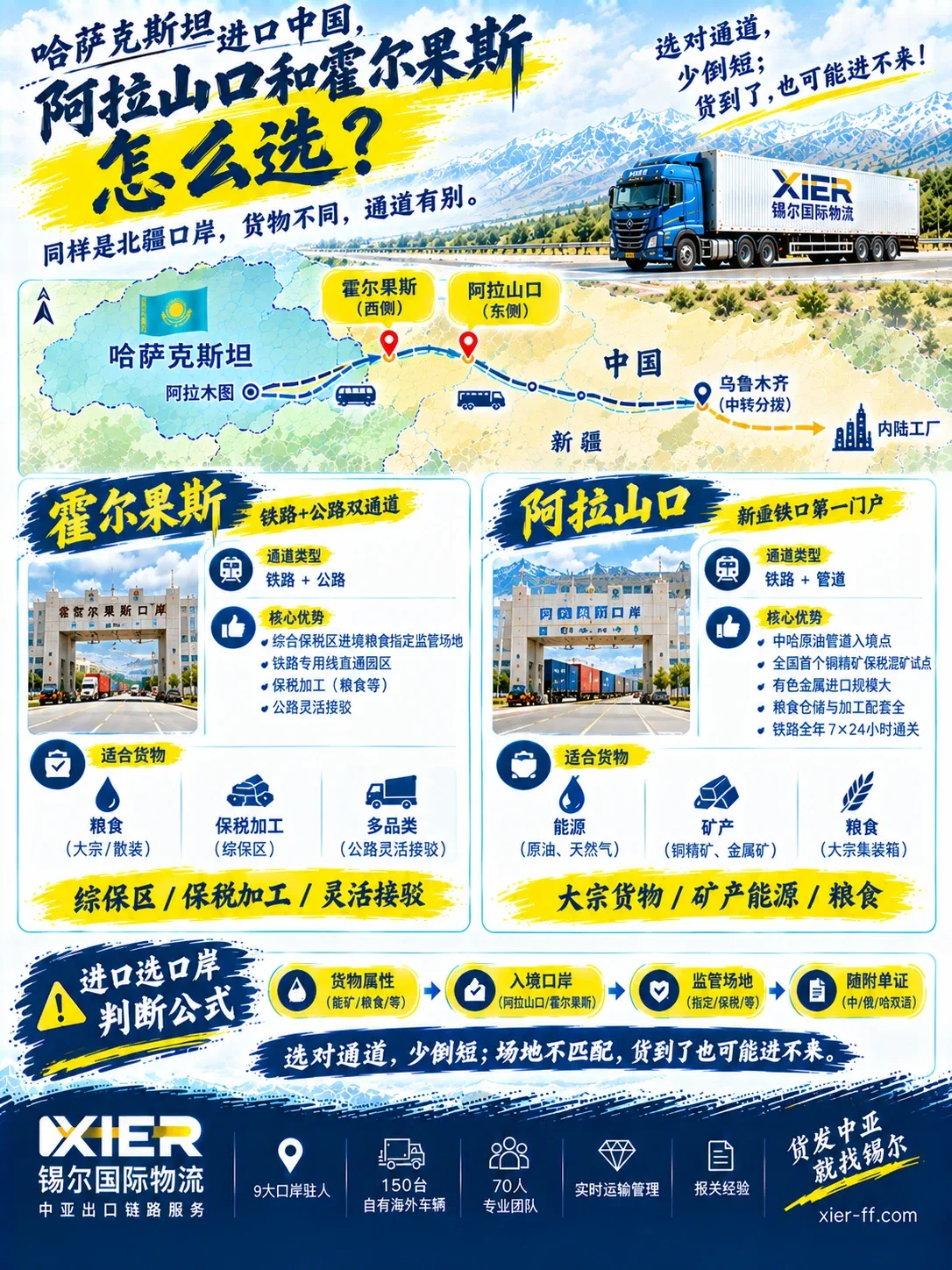 图2:哈萨克斯坦进口中国,阿拉山口和霍尔果斯怎么选——霍尔果斯铁路+公路双通道(粮食/保税加工/多品类),阿拉山口新疆铁路第一门户(能源/矿产/粮食),附进口选口岸判断公式。
The biggest taboo in import is "ship first, supplement documents later." The essentials for several main cargo types are as follows:
- Grain (wheat, barley, sunflower seeds, etc.): Must enter through a designated grain import supervision site, with the "Import Animal and Plant Quarantine License" prepared in advance (some categories exempt), and Kazakh official phytosanitary certificate and certificate of origin prepared; oilseeds such as sunflower seeds and flaxseed also apply.
- Mineral products (copper concentrate, electrolytic copper, etc.): Go through pilot channels such as Alashankou bonded ore mixing, pay attention to classification and declaration elements; the "port + destination" joint inspection and supervision model can greatly compress clearance time.
- Energy (crude oil, liquefied petroleum gas): Enter through the China-Kazakhstan crude oil pipeline at Alashankou; large-scale imports require supporting storage and transshipment plans.
- Agricultural products and oilseeds: Can use the "green channel" for fast clearance of agricultural and sideline products already established between China and Kazakhstan, achieving immediate filing on arrival and immediate release after inspection.
- Meat / chilled fresh (pilot expansion underway): Must enter through the corresponding designated import supervision sites for meat and chilled aquatic products; agreements such as for Kazakh beef continue to expand.
At the document level, the trade contract, invoice, packing list, and bill of lading must be consistent item by item with the physical goods' name, quantity, and weight, avoiding "one set of documents, one set of goods." For food and feed, labels and health certificates are also often overlooked; it is recommended to prepare them all at once.
V. Common Misconceptions of Importers and Speed-Up Suggestions
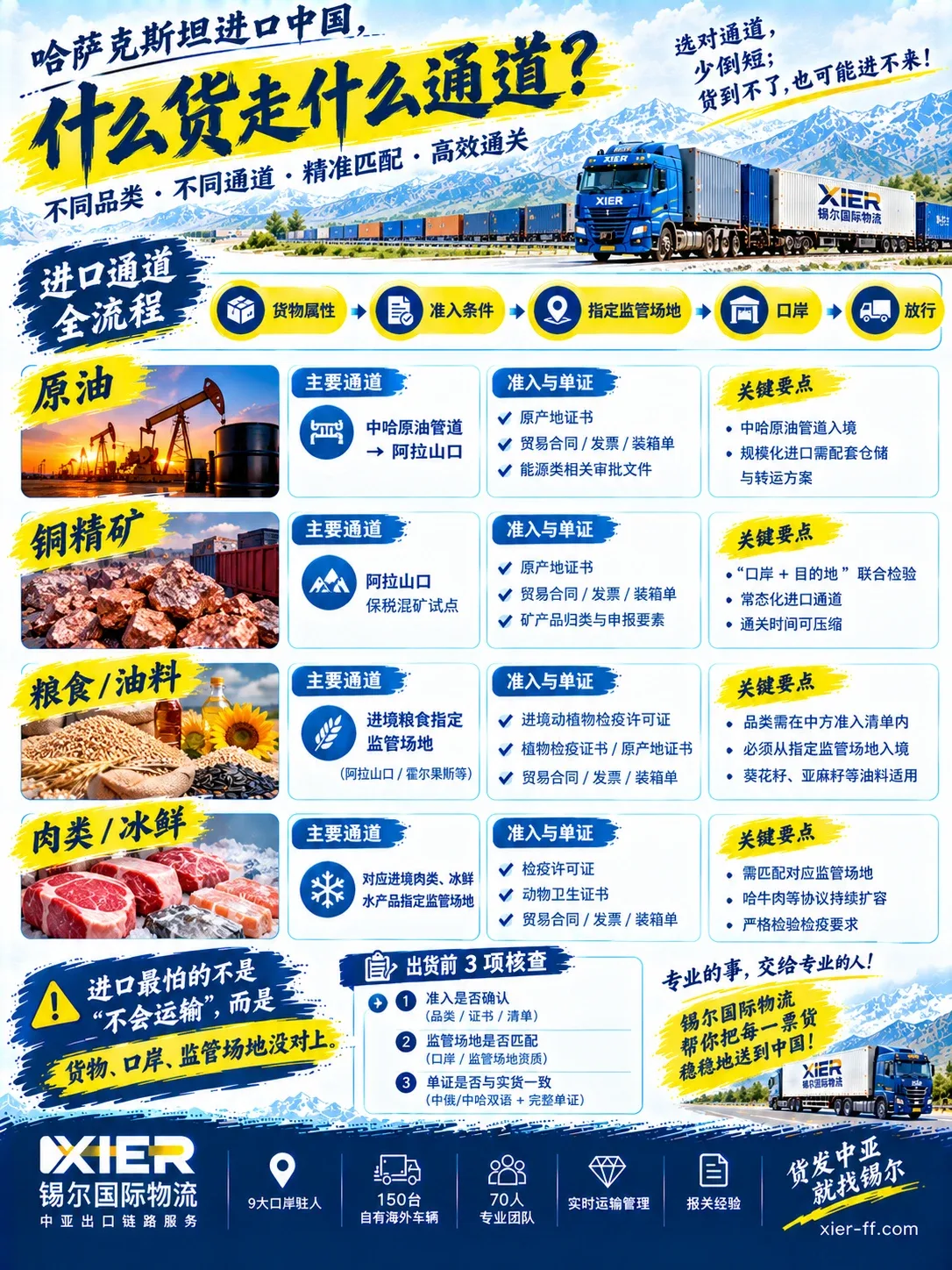 图3:哈萨克斯坦进口中国,什么货走什么通道——原油、铜精矿、粮食油料、肉类冰鲜四类货品的主要通道、准入与单证、关键要点,及发货前3项核查。
The first misconception is thinking "export the way you go, import the same way." Exports commonly use southern Xinjiang road ports, while imports of bulk Kazakh goods use northern Xinjiang railway ports — different directions mean different channels. The second misconception is ignoring supervision site matching; if grain is shipped to a port without a designated supervision site, it can only be rerouted and rescheduled. The third misconception is using only English documents; Chinese customs declaration usually requires Chinese-Russian / Chinese-Kazakh bilingual documents, and the Kazakh export side also needs local agent cooperation. There are three speed-up suggestions: first, do access and site verification before shipment; second, prepare bilingual documents and pre-review in advance; third, connect with a team that has on-site port staff for full-process tracking. Xier's 150 owned foreign-related vehicles ensure capacity even in peak season and for urgent goods without needing to dispatch vehicles at the last minute; its customs team with over 5 years of experience can check documents item by item against the category list, changing "ship first, supplement documents later" into "verify documents first, then ship."
Frequently Asked Questions
Can grain be imported from Kazakhstan through just any port?
No. Grain must enter through ports with designated grain import supervision sites; currently in the Urumqi customs district, mainly Alashankou, Khorgos, and similar ports, and the category must be within the Chinese access list (e.g., Kazakh barley, wheat, sunflower seeds).
Alashankou or Khorgos — how to choose for import?
Bulk energy, minerals, and grain go more smoothly through Alashankou; those needing bonded processing in the comprehensive bonded zone and flexible road connection can look more to Khorgos. The core is to match the cargo attribute with the port's supervision site.
What special channel is there for copper concentrate import?
Alashankou is the country's first land port to pilot "bonded ore mixing" for copper concentrate, with normalized imports of non-ferrous metal minerals; the "port + destination" joint inspection and supervision model can compress clearance time.
Must import documents be bilingual?
Declaring to Chinese customs usually requires Chinese-Russian / Chinese-Kazakh bilingual documents, and the Kazakh export side also needs local agent cooperation. Preparing bilingual invoices and packing lists in advance can reduce port rework.
What can Xier do for importers?
Xier has staff at 9 major ports, 150 owned vehicles, and a customs team with over 5 years of experience; it can simultaneously follow up on the port declaration, inspection, and domestic transit distribution of Kazakh imported goods at Alashankou / Khorgos. For a plan, contact 18195891000.
About the Author: Xier International Logistics — focused on Central Asia logistics market analysis and digital solutions. Based on a decade of Xier's operational data and industry research, this article is for reference only; specific solutions must be tailored to your cargo.