I. Why Agricultural Products Are a Port Inspection Focus
Central Asian countries generally enforce strict plant quarantine and food safety access for imported agricultural products. Unlike industrial manufactured goods, agricultural products such as fruits, vegetables, dried fruits, grain, tea, and condiments must obtain an official phytosanitary certificate issued by the exporting country before export, and some categories also require fumigation / disinfection treatment certificates; the destination country's customs will also verify the certificate of origin, pesticide residue, and heavy metal test data. Missing any document or inconsistent information, at best causes 2–3 days of detention for correction at the port, at worst leads to whole-batch return.
For fruits, vegetables, and frozen products requiring refrigeration, the problem is more complex: incomplete temperature records and substandard insulation packaging can cause the goods to be judged as "cold-chain break" during port unpacking inspection, leading to direct detention. Choosing the right port and getting the documents and temperature control plan right in advance is far more worry-free than remedying at the port. Xier International Logistics has long-term staff at 9 major ports, 150 owned foreign-related transport vehicles, and a Kashgar customs team with over 5 years of experience, providing a one-stop solution from classification to port declaration; Tel 18195891000.
II. Inspection and Quarantine: Prepare the "Certificates" First
The first step is to confirm the destination country's access list and quarantine requirements. Taking export to Kazakhstan and Uzbekistan as examples, commonly required are: Phytosanitary Certificate, Certificate of Origin (such as FORM A or the preferential certificate of origin under the Central Asia free trade framework), and pesticide residue test reports for some commodities. Wooden packaging must bear the IPPC mark, proving it has been fumigated as required.
There are three common causes of detention: first, the phytosanitary certificate does not match the goods (certificate product name, quantity inconsistent with the actual loaded goods); second, missing fumigation / disinfection certificate; third, the certificate of origin does not match the invoice information. Checking item by item against the destination country's list before shipment saves at least 2–3 days compared with supplementing documents at the port.
III. Packaging and Labels: Details Determine Whether Release Is Granted
Agricultural product packaging must be moisture-proof and pressure-resistant, and also meet clearance and supermarket access requirements. The outer box shipping marks are recommended to be bilingual Chinese-English (or Chinese-Russian), marking product name, net/gross weight, production batch, and destination country; inner packaging and pallets must meet the destination country's food contact material requirements. Wooden packaging must have the IPPC mark, otherwise it may be required to be fumigated on-site or even returned.
For pre-packaged foods planned to enter Central Asian supermarkets, labels must also include the ingredient list, shelf life, and storage conditions. Confirming label specifications with the buyer in advance can avoid being required to rectify due to unqualified labels after arrival at port.
IV. Cold-Chain Goods: The Temperature Control Plan Matters More Than the Truck
For cold-chain goods such as fruits, vegetables, frozen meat, and dairy products, the core is not "using a refrigerated truck" but an unbroken full-process temperature control chain. In practice, you must choose the right insulated box / cold accumulator combination, set a reasonable temperature control range, and keep temperature records at every transport stage. During port unpacking inspection, a complete temperature curve is an important basis for release.
This is also why fresh cold-chain goods value port clearance speed more — in southern Xinjiang, the Irkeshtam Port's 7×24-hour clearance can significantly reduce the goods' stay time at the port and temperature fluctuations. Xier International has long-term on-site presence at Irkeshtam, able to follow up on inspection and release on-site, minimizing the impact of port detention on temperature control.
For more cold-chain and temperature control plans, refer toXier International cold-chain serviceandowned fleet vehicle models。
V. How to Choose Among the Four Major Southern Xinjiang Ports: From the Agricultural Export Perspective
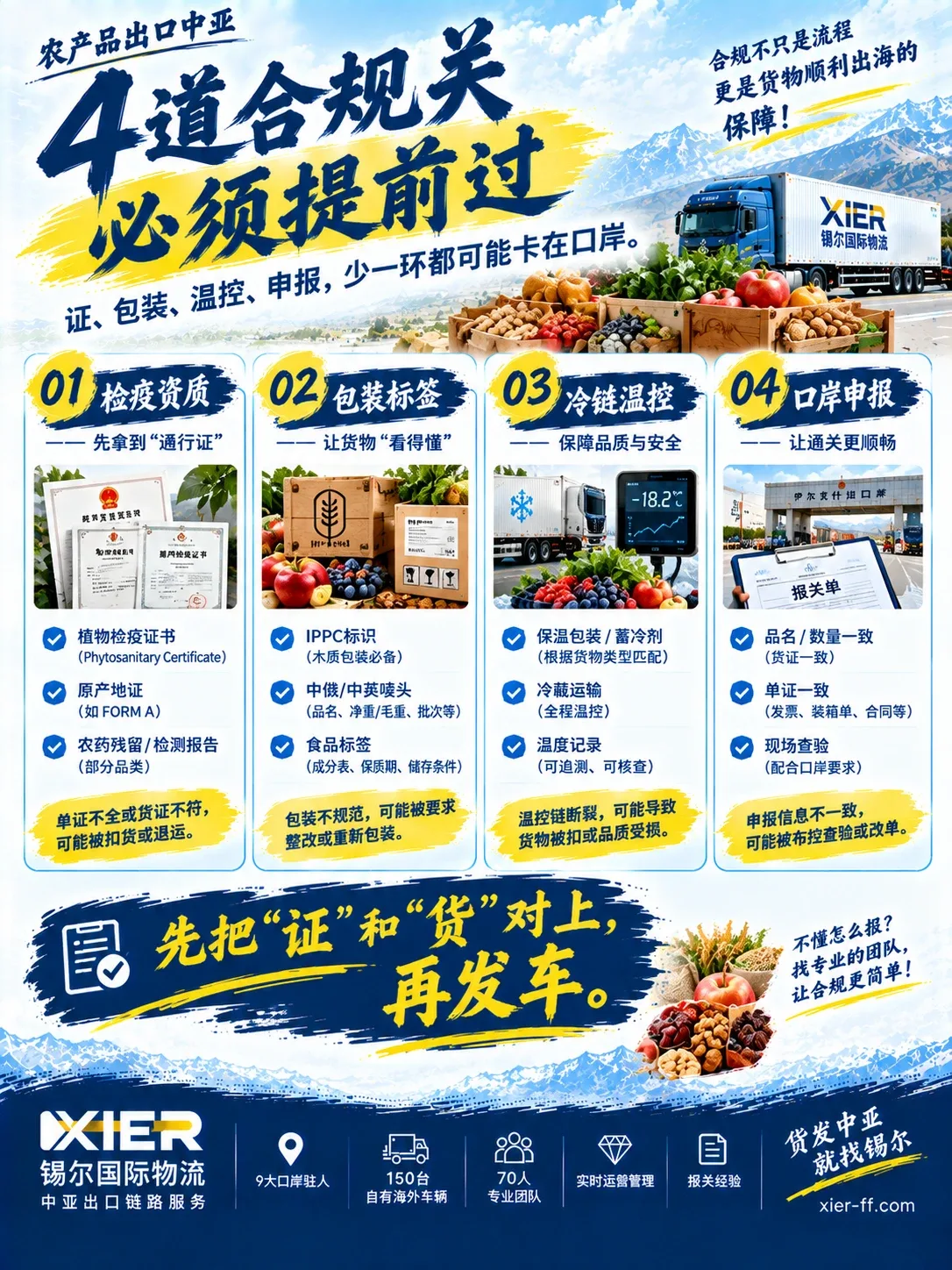 图2:农产品出口合规校验四步——检疫资质、包装标签、冷链温控、口岸申报,少一环都可能卡在口岸。
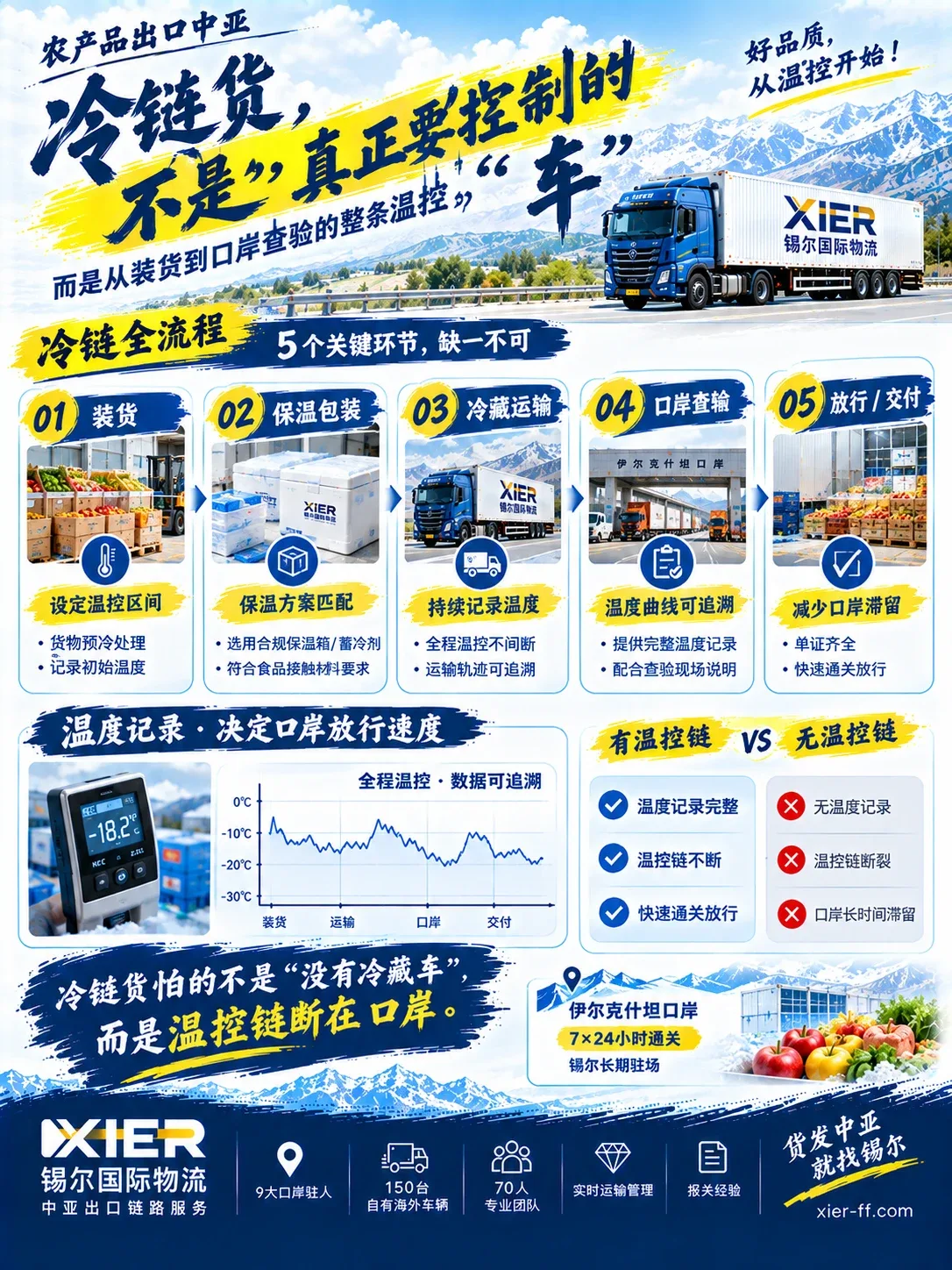 图1:冷链货,真正要控的是温控链——装货、保温包装、冷藏运输、口岸查验、放行交付,5 个环节缺一不可,温控链断在口岸最致命。
For agricultural exports to Central Asia, the mainstream is southern Xinjiang road ports. Different destinations correspond to different ports:
Irkeshtam Port(Wuqia County, adjacent to Osh Region of Kyrgyzstan) is Xier International's core advantage port, the smoothest to Uzbekistan and southern Kyrgyzstan, with its own on-site team able to handle inspection on-site;Torugart Portcorresponds to northern Kyrgyzstan, suitable for full-truckload bulk dried fruits and grain;Karasu Portleads to Tajikistan, high altitude, strong seasonality;Khunjerab Portleads to Pakistan, short window period, requires advance scheduling. For the Kyrgyz / Uzbek / Tajik / Pakistan / Afghanistan directions, prioritizing Irkeshtam and bringing out Xier's on-site presence and transit time data is the standard play for this line.
For the northern Xinjiang direction, Khorgos (rail + road dual corridor) and Alashankou (main railway corridor) are more suitable for bulk agricultural container transport with moderate transit time requirements; Urumqi can connect multimodal transport, combining road consolidation with rail trunk lines. For specific port selection and transit time, it is recommended to combine cargo type, destination, and seasonal window, with a professional team giving a customized route. Related cases are shown inXier Customer Cases。
Frequently Asked Questions
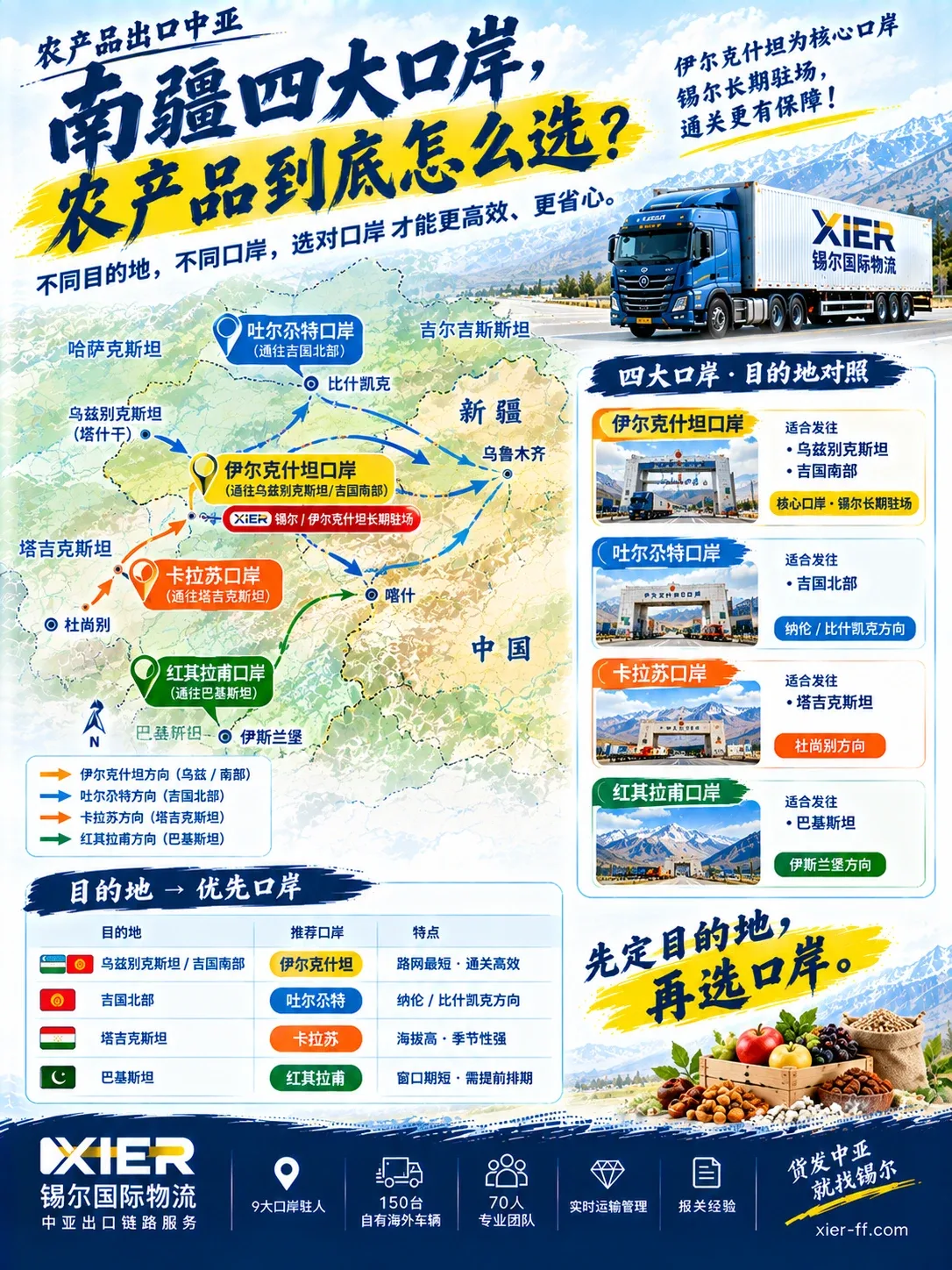 图3:南疆四大口岸怎么选——先定目的地,再选口岸;伊尔克什坦为锡尔长期驻场核心口岸,通关更有保障。
Q1: For agricultural exports to Central Asia, is a phytosanitary certificate mandatory?
Yes. Central Asian countries generally require an official phytosanitary certificate from the exporting country for imported agricultural products, and some categories also need fumigation / disinfection certificates and pesticide residue test reports. Without a certificate or with mismatch between goods and certificate, the goods are usually detained or returned at the port.
Q2: What special requirements apply to wooden packaging?
All wooden packaging (pallets, wooden boxes) must bear the IPPC international quarantine treatment mark, proving they have been fumigated or heat-treated as required. Without the mark, the goods may be required to be fumigated on-site at the port or even returned as a whole batch.
Q3: What do cold-chain goods fear most at Central Asian ports?
The most feared is a broken temperature control chain. If there is no complete temperature record during port unpacking inspection, the goods may be judged unqualified. Choosing a 7×24 clearance port (such as Irkeshtam) and reducing detention is the key to temperature control.
Q4: Which Xinjiang port is smoothest for sending agricultural products to Uzbekistan?
Irkeshtam Port is the smoothest, entering the Uzbekistan road network via Osh in Kyrgyzstan with the shortest route. Xier International has long-term on-site presence at this port, able to follow up on inspection and release on-site, with more controllable transit time.
Q5: With no experience, should I do customs declaration myself or use a freight forwarder?
Agricultural products involve many documents and port policies change quickly; it is recommended to find a freight forwarder with on-site port and customs declaration teams. You can first go throughContact Xier International LogisticsGet a free clearance plan first, then decide whether to entrust.
About the Author: Xier International Logistics — focused on Central Asia logistics market analysis and digital solutions. Based on a decade of Xier's operational data and industry research, this article is for reference only; specific solutions must be tailored to your cargo.